
Modern military clothing has evolved far beyond the traditional concept of uniform. For today’s dismounted soldier, operational clothing is part of a wider integrated system designed to support mobility, protection, endurance and the effective use of other mission equipment.
That makes the choice of combat clothing a capability consideration rather than simply a clothing procurement decision.
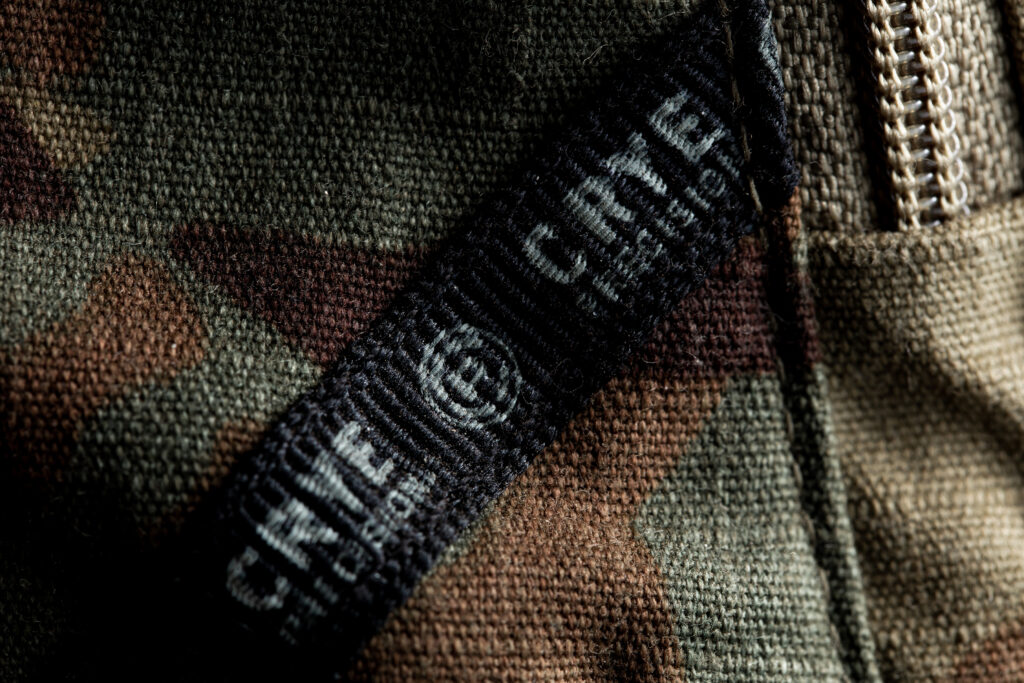
Crye Precision combat clothing is a strong example of this approach. Its combat uniforms are designed around the physical demands placed on military and tactical users, with clothing intended to work alongside body armour, joint protection and other equipment rather than being treated as a separate layer.
For defence organisations looking at the modern soldier as an integrated capability, this distinction matters.
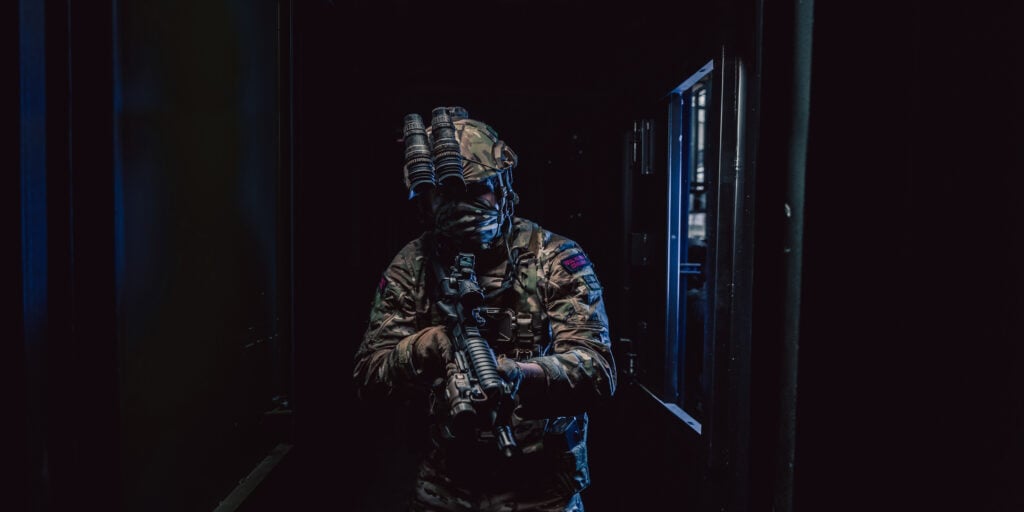
What is operational combat clothing?
Operational combat clothing is clothing specifically designed around the environments, equipment and physical tasks encountered during military operations.
A soldier may need to move quickly, kneel, crawl, climb, operate from vehicles, carry substantial loads and remain effective for extended periods. At the same time, clothing has to coexist with body armour, belts, load carriage, communications equipment and other mission systems.
The requirement therefore extends well beyond durability.
A modern soldier clothing system can contribute to:
- freedom of movement and reduced restriction;
- management of heat and moisture;
- integration with body armour and load carriage;
- protection of vulnerable areas such as the knees and elbows;
- reduced bulk where equipment overlaps;
- accessibility of mission-essential equipment;
- performance across different climates and environments; and
- appropriate fit for the individual operator.
These considerations make operational clothing part of the broader integrated soldier system.
Why does operational clothing matter to soldier performance?
The effectiveness of individual pieces of equipment cannot always be considered in isolation.
A highly protective body armour system, for example, still has to allow an operator to move effectively. Load carriage needs to work with that armour. Clothing underneath it needs to avoid unnecessary bulk, manage heat and moisture and permit the movements required by the operator.
Small compromises can become significant when equipment is worn for hours at a time.
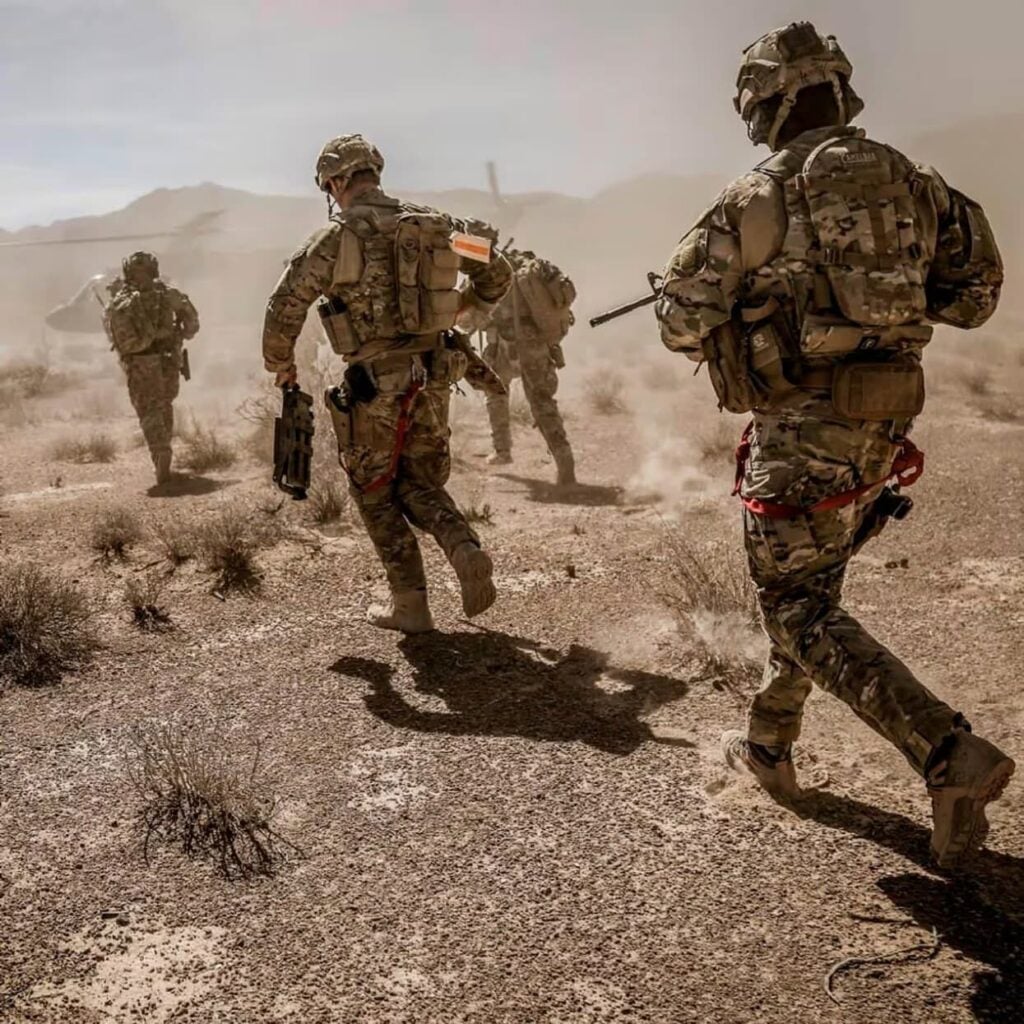
Crye Precision G4 combat clothing
Crye Precision’s G4 range demonstrates how combat clothing can be engineered around the operator.
The G4 Combat Shirt, for example, uses Crye’s VTX RIPSTOP™ stretch fabric in combination with high-tenacity nylon in the sleeves. The torso uses a lightweight flame-resistant jersey and the garment is specifically designed to be worn underneath body armour. Integrated stretch allows a relatively close-fitting garment while retaining mobility.
This is an important principle in modern combat clothing.
Rather than simply making a conventional uniform looser to provide freedom of movement, stretch, articulation and garment construction can be used to allow movement while controlling excess material and bulk.
The G4 Combat Shirt also incorporates low-profile shoulder pockets and accepts Crye’s removable AIRFLEX™ elbow pads.
The result illustrates the difference between clothing designed simply to be worn by a soldier and clothing engineered as part of the equipment surrounding that soldier.
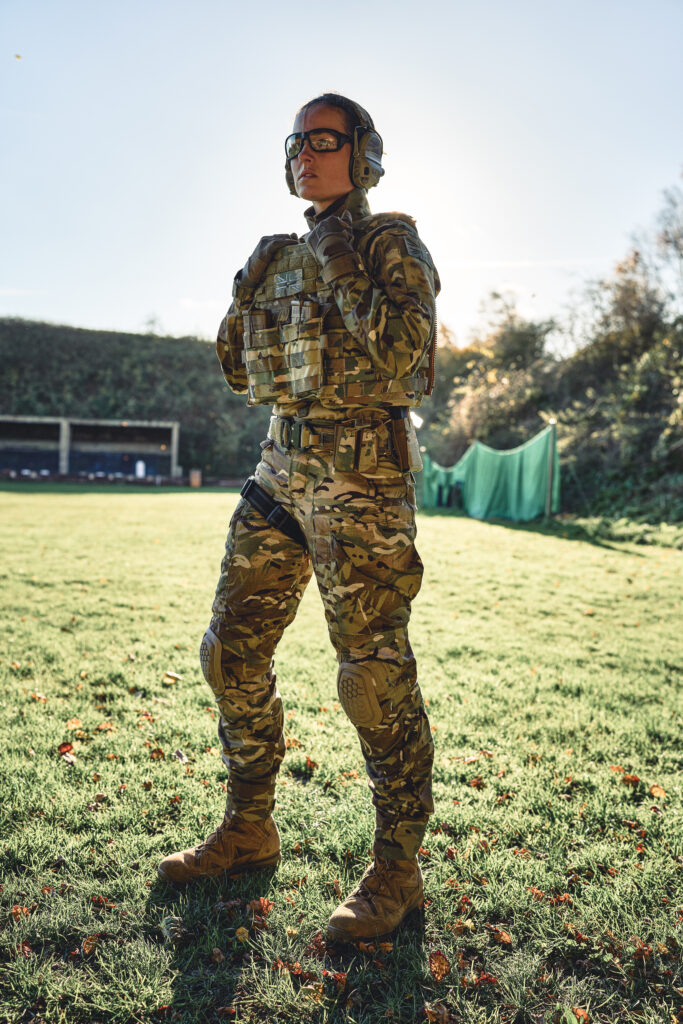
Combat trousers designed around movement
The same principles can be seen in the Crye Precision G4 Combat Pant.
Crye uses VTX RIPSTOP™ stretch fabric and T420 high-tenacity nylon to combine relatively low weight with durability. Stretch is incorporated throughout the garment to support mobility, while mesh venting helps airflow.
There is also considerable attention to the interaction between the garment and the operator’s equipment.
The G4 Combat Pant incorporates an adjustable padded waistband, low-profile cargo pockets, knee-pad height and tension adjustment and compatibility with Crye’s removable AIRFLEX™ combat knee pads. Cargo pockets incorporate stabilisers for items such as water bottles or magazines, while other pockets provide access to smaller equipment.
These details demonstrate an important point about modern soldier clothing systems: pockets, protection, ventilation, fit and mobility all have to be considered in relation to what the operator is actually doing.
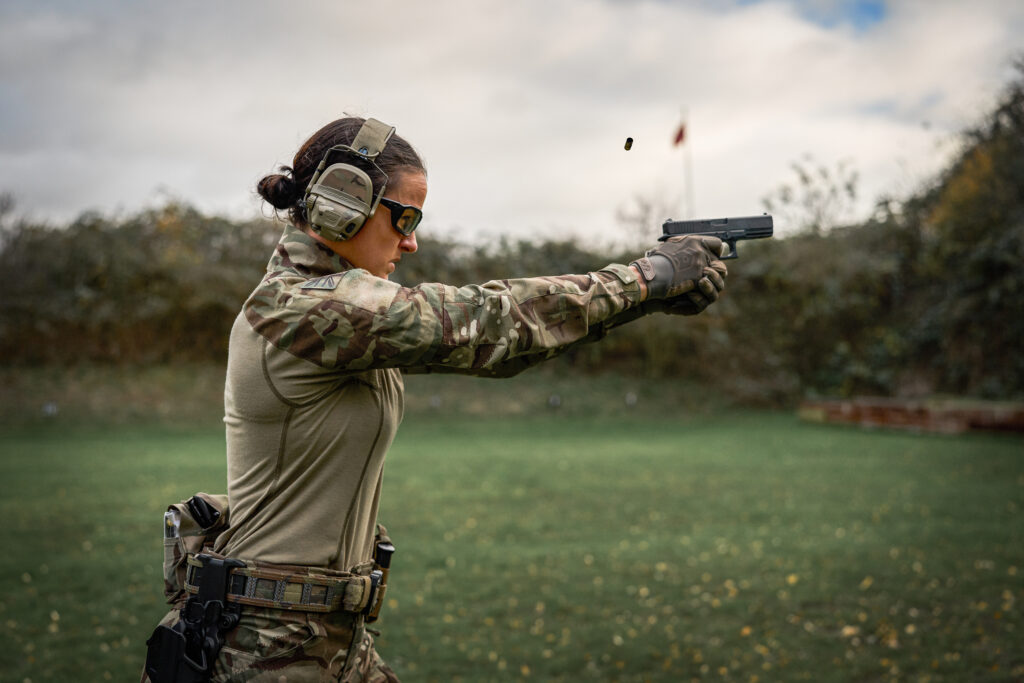
Integrating clothing with body armour and equipment
One of the most important requirements for modern operational clothing is integration.
A combat shirt may spend much of its operational life underneath body armour. Adding conventional pockets, seams and layers of fabric beneath an armour system can create unnecessary bulk or discomfort.
Crye specifically describes its G4 Combat Shirt as being designed for wear under body armour. Its low-profile shoulder pockets retain storage while moving it away from the areas most affected by the armour system.
The principle extends across the soldier system.
Clothing needs to be considered alongside:
Body armour: garments should minimise unnecessary interference beneath plates, carriers and straps.
Load carriage: pockets and adjustment points need to remain usable when belts and other load-bearing equipment are worn.
Joint protection: integrated knee and elbow protection can provide protection where required without relying on completely separate external systems.
Thermal management: body armour and load carriage can reduce airflow and increase heat burden, making the properties of the clothing beneath them increasingly important.
Mobility: the combined system needs to allow the operator to run, climb, kneel, crawl and adopt firing positions without individual components unnecessarily restricting movement.
It is this systems approach that turns a collection of individual products into an operational capability.
Clothing for different operational environments
There is no single clothing configuration suitable for every mission.
Temperature, humidity, precipitation, vegetation, fire risk, activity level and the amount of equipment being carried can all change what is required from an operational clothing system.
Crye’s G4 family consequently extends beyond its standard combat and field garments. Its range includes G4 Hot Weather, G4 FR (flame-resistant) and G4 Temperate Shell clothing alongside its standard G4 garments.
The Hot Weather range, for example, is intended for demanding jungle and arid environments and uses fast-drying fabrics together with moisture-management technologies. The Temperate Shell system instead provides weather resistance and is designed with layering in mind.
This illustrates why operational clothing procurement should begin with the requirement rather than simply the product.
The question is not merely which combat uniform should we buy?
It is what does the operator need the clothing system to do in this environment and alongside this equipment?
Flame-resistant combat clothing
Certain operational roles introduce an additional requirement: flame resistance.
Crye’s G4 FR Combat Shirt uses inherently flame-resistant fibres in its High Strength Commando™ Twillstop sleeves together with a lightweight flame-resistant jersey torso. Like the standard G4 garment, it is designed for wear beneath body armour and incorporates provision for removable elbow protection.
Crye states that its G4 FR clothing has been flame tested using NC State’s Pyroman in accordance with ASTM F1930.
The existence of specialist FR variants reinforces the wider procurement principle: the required clothing configuration should be determined by the hazards and operational conditions facing the user.
Fit is an operational consideration
Correct fit is sometimes treated as a comfort issue. For operational equipment, its implications can be considerably wider.
Poorly fitting clothing can introduce excess material, restrict movement or affect where integrated protective components sit relative to the body.
This becomes particularly relevant when equipment designed around one body shape is expected to serve a much broader user population.
Crye Precision has developed dedicated G4 Female Fit Combat and Field clothing. Rather than simply offering smaller versions of the standard garments, Crye says the clothing has been specifically patterned for female users.
For example, the G4 Female Fit Combat Shirt incorporates bust and waist shaping, narrower sleeves, raised armholes, adjusted shoulder dimensions and a shorter body.
The corresponding Combat Pant incorporates hip shaping, reduced front and back rise, adjusted inseam dimensions and optimised knee-pad positioning.
Crye says its Female Fit uniforms were developed using end-user feedback and fit evaluations with the aim of improving comfort, mobility and functionality.
This represents an increasingly important aspect of soldier-system thinking: equipment needs to fit the operator rather than requiring the operator to adapt to equipment designed around somebody else.
Operational clothing and soldier survivability
Clothing alone does not create survivability, but it contributes to the wider system that supports it.
The connection can be direct, as with flame-resistant clothing and integrated joint protection, or indirect through factors such as mobility, thermal management and compatibility with protective equipment.
This is why clothing should be considered alongside armour, helmets, footwear, load carriage, communications and other soldier equipment systems.
It also supports a broader shift in defence procurement away from considering equipment purely as a collection of independent products.
The objective is not simply to equip the soldier.
It is to create an integrated system in which individual components work together to support the mission and the person carrying it out.
From equipment procurement to operational capability
For defence organisations, specifying operational clothing therefore involves more than selecting a garment from a catalogue.
The procurement process needs to consider the users, operating environment, protection requirements, other equipment being worn, anticipated activity and how the clothing fits within the complete soldier system.
This is particularly relevant when specialist equipment needs to be sourced and integrated across defence and NATO requirements.
Level Peaks works as a capability partner, supporting defence and security customers with specialist equipment, procurement and integration rather than viewing individual products in isolation.
That distinction is important.
The right Crye Precision garment is not necessarily the same for every operator or every mission. The requirement might call for standard G4 combat clothing, hot-weather garments, flame-resistant protection, female-specific fit or a combination of clothing and associated equipment.
Understanding that requirement is the first step towards providing the appropriate solution.
Supporting the modern soldier
The development of combat clothing demonstrates how apparently simple pieces of equipment have become increasingly sophisticated elements of modern soldier capability.
Stretch fabrics, articulation, ventilation, flame resistance, integrated joint protection, body-armour compatibility and operator-specific fit all address particular operational requirements.
Crye Precision’s combat clothing provides a clear example of this evolution.
For the modern soldier, clothing is no longer simply a uniform.
It is part of the system that enables the operator to move, carry, protect, endure and perform.
And when soldier capability is considered as an integrated whole, getting that clothing system right can be just as important as getting the equipment worn over it right.
Frequently Asked Questions
What is Crye Precision combat clothing?
Crye Precision produces specialist combat and field clothing designed for military, law-enforcement and tactical applications. Its current ranges include standard G4 clothing as well as Hot Weather, flame-resistant and Female Fit variants.
What is the difference between combat clothing and a standard military uniform?
Operational combat clothing is designed around the physical and equipment requirements of the user. Features can include stretch and articulated construction, ventilation, low-profile pockets, integrated joint protection and designs intended to work underneath body armour.
Why are combat shirts designed to be worn under body armour?
Body armour introduces weight, pressure and additional layers around the torso. Purpose-designed combat shirts can reduce unnecessary bulk beneath armour while retaining more durable sleeves and accessible pockets in areas that remain exposed. Crye specifically designs its G4 Combat Shirt for use under body armour.
How does operational clothing improve mission effectiveness?
Appropriate operational clothing can support mobility, thermal management, equipment integration and protection. The aim is to reduce unnecessary interference with the operator while allowing other components of the soldier system to function effectively.
What is flame-resistant combat clothing?
Flame-resistant combat clothing is designed to provide additional protection where personnel may face thermal or flame hazards. Crye’s G4 FR range uses inherently FR materials, with its combat garments tested in accordance with ASTM F1930.
Does Crye Precision make combat clothing specifically for women?
Yes. Crye Precision produces Female Fit versions of its G4 Combat Shirt, Combat Pant, Field Shirt and Field Pant. These use specific patterning and adjustments to improve fit, mobility and equipment positioning for female users.
Why should operational clothing be considered part of a soldier system?
A soldier’s clothing interacts directly with body armour, load carriage, joint protection and other equipment. Considering these elements together can help reduce conflicting components, unnecessary bulk and restrictions on movement while supporting the overall operational requirement.