
Modern military personnel are expected to operate in increasingly complex environments, often carrying a substantial amount of equipment to support their mission. From body armour and communications systems to ammunition, medical supplies and specialist operational equipment, every item contributes to the overall load carried by the individual.
While advances in technology have improved soldier protection, situational awareness and operational capability, they have also introduced additional demands on the dismounted soldier.
Reducing carried load weight without compromising operational capability is therefore an important consideration in modern soldier system design.
The challenge is not simply to make equipment lighter. It is to ensure that every component contributes to operational effectiveness while maintaining the appropriate balance between protection, mobility, endurance and mission requirements.
How Does Carried Load Affect Soldier Performance?
The weight carried by military personnel can have a significant impact on physical performance, particularly during prolonged operations or when operating across difficult terrain.
A dismounted soldier may be required to carry body armour, weapons, ammunition, communications equipment, water, medical supplies and other mission-essential items. Depending on the operational environment, additional equipment may be required for specialist tasks.
As the overall load increases, so does the physical demand placed on the individual.
Excessive carried weight can contribute to several operational challenges:
- Reduced mobility: Heavy equipment can restrict movement, particularly when negotiating obstacles, confined spaces or difficult terrain.
- Increased fatigue: Greater physical effort is required to move with additional weight, potentially reducing endurance during extended operations.
- Reduced agility: Bulky or poorly distributed equipment can affect balance, flexibility and the ability to respond quickly.
- Greater physiological strain: Carrying heavy loads increases energy expenditure and can contribute to heat stress, particularly in demanding environments.
- Increased injury risk: Repeated exposure to heavy loads can contribute to musculoskeletal strain and overuse injuries.
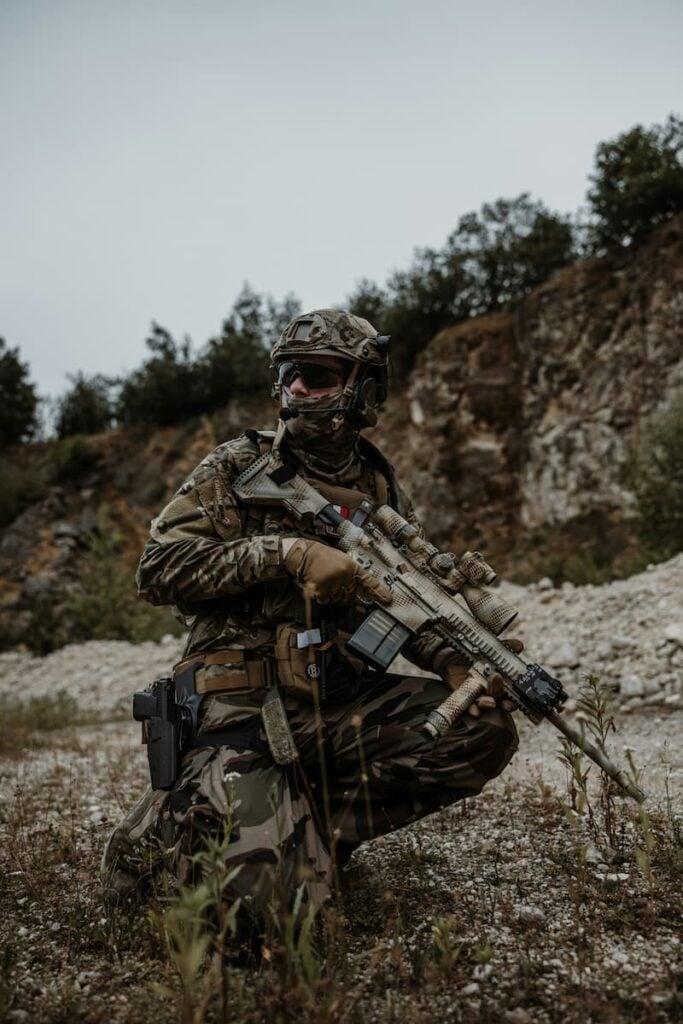
These effects demonstrate why carried load should be considered as part of a wider approach to human performance in defence.
Equipment must support the individual carrying it, rather than unnecessarily increasing the physical demands of their role.
Why Is Equipment Integration Important for Reducing Weight?
One of the most effective approaches to reducing unnecessary carried weight is to consider equipment as an integrated system rather than a collection of individual products.
Historically, equipment has often been introduced to address specific operational requirements. While each addition may provide a useful capability, the cumulative effect can result in increased weight, bulk and complexity.
A new communications device, for example, may require additional batteries, cables, mounting systems and protective accessories. Individually, these components may appear relatively insignificant, but their combined weight can become substantial.
An integrated approach considers how equipment works together and whether existing components can support multiple requirements.
Reducing Equipment Duplication
Where appropriate, common power supplies, compatible mounting arrangements and shared accessories may help reduce unnecessary duplication.
This requires careful consideration of equipment compatibility, reliability and operational requirements.
Improving Equipment Configuration
The arrangement of equipment can be as important as its overall weight.
Poorly positioned pouches, accessories and electronic systems can restrict movement or create unnecessary bulk.
An integrated soldier system considers how equipment is carried, accessed and used during operational tasks.
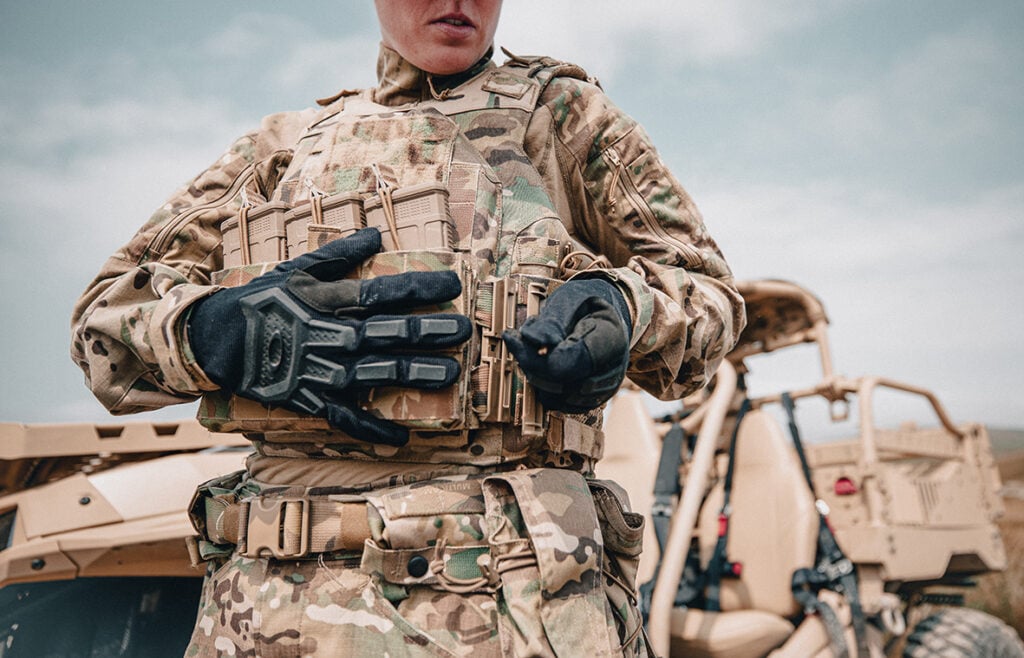
Selecting Equipment for the Complete System
A lightweight individual product does not necessarily produce a lighter overall system.
For example, a piece of equipment may offer a weight saving but require additional accessories that reduce or eliminate the benefit.
Evaluating equipment within the complete soldier system provides a more accurate understanding of its contribution to overall carried weight.
Effective equipment integration is therefore about improving the performance of the complete system, rather than optimising individual components in isolation.
Balancing Soldier Protection and Mobility
Personal protection is one of the most important considerations in soldier equipment design.
Body armour, ballistic helmets and other protective equipment contribute directly to survivability, but they also represent a significant proportion of the weight carried by military personnel.
Reducing protection simply to achieve a lighter load is not an acceptable solution where it would expose personnel to unnecessary risk.
Instead, equipment selection should reflect the operational threat, mission requirements and the needs of the individual.
Matching Protection to Operational Requirements
Different roles and environments may require different levels of protection.
The equipment appropriate for one operational task may not be suitable for another.
A mission-specific approach allows defence organisations to evaluate protective equipment against the risks personnel are expected to encounter, rather than applying a single configuration to every situation.
Considering Fit and Ergonomics
Protective equipment must fit correctly to deliver its intended performance.
Poorly fitted body armour or load carriage equipment can create pressure points, restrict movement and affect the distribution of weight.
Individual fit is particularly important where equipment must accommodate differences in body shape, size and operational role.
Appropriately designed and fitted equipment can improve comfort and mobility without compromising the protection required.

Evaluating the Complete Load
Body armour should not be considered separately from the equipment carried alongside it.
Plate carriers, ammunition pouches, communications equipment, medical supplies and other accessories all influence the overall configuration.
A systems-based assessment can help identify opportunities to improve weight distribution, reduce unnecessary bulk and maintain access to essential equipment.
Five Key Considerations for Optimising Soldier Load Carriage
Reducing carried load requires a structured approach that considers operational requirements, equipment selection and the needs of the individual.
1. Define the Mission Requirements
The starting point should always be an understanding of the operational task.
What equipment is essential? What level of protection is required? How long will personnel operate without resupply?
Clearly defined requirements help distinguish mission-essential equipment from items that may be unnecessary for a particular task.
2. Assess the Complete Equipment System
Individual equipment weight is only one part of the calculation.
Batteries, cables, mounting systems, pouches and other accessories must also be considered.
Assessing the complete configuration can reveal opportunities to reduce duplication or select more efficient alternatives.
3. Prioritise Ergonomics and Weight Distribution
The way equipment is carried influences how it affects the individual.
A well-designed load carriage system should distribute weight appropriately while allowing access to essential equipment.
Fit, adjustability and compatibility with protective equipment are important considerations.
4. Consider Human Performance
Equipment selection should account for the physical demands placed on military personnel.
Factors such as endurance, mobility, heat management and fatigue can influence operational effectiveness.
Where appropriate, user trials and representative operational assessments can help determine whether changes to equipment configurations deliver meaningful benefits.
5. Review Equipment as Operational Requirements Evolve
Soldier equipment requirements are not static.
Changes in technology, operational environments and mission profiles can introduce new demands.
Regular assessment helps ensure that equipment remains appropriate and that unnecessary weight or complexity is not retained simply because it formed part of an earlier configuration.
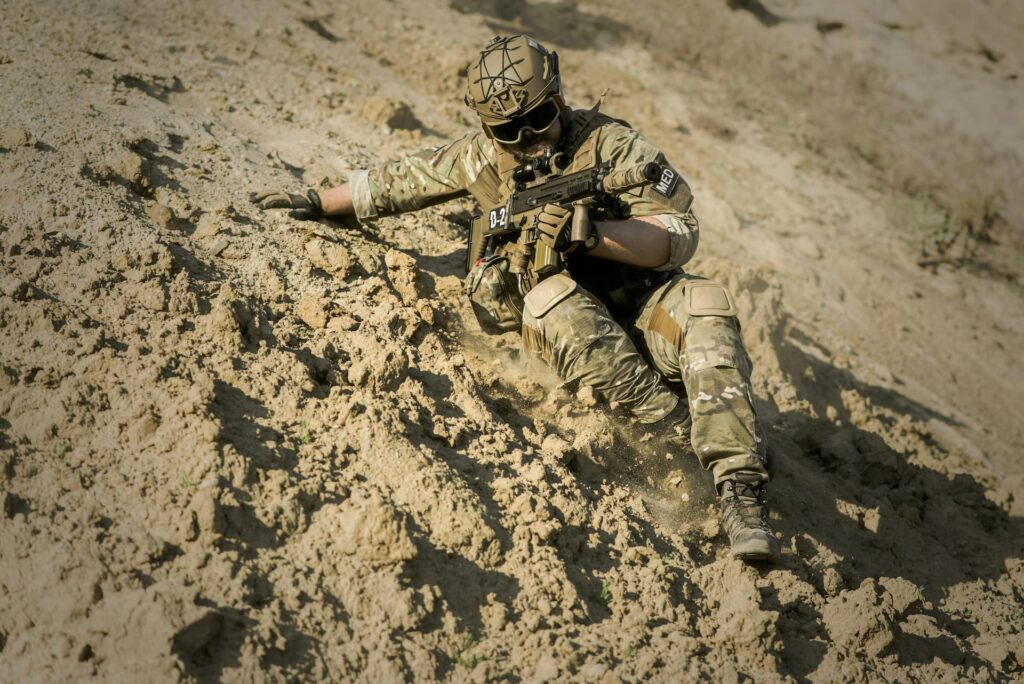
Why Is a Systems-Based Approach Important for Operational Capability?
Reducing carried load should not be treated as an isolated equipment procurement exercise.
A lighter product may offer advantages, but the wider objective is to improve the effectiveness of the individual and the equipment system supporting them.
This requires consideration of several interconnected factors:
Protection: Does the equipment provide the required level of protection against the anticipated threats?
Mobility: Can personnel move effectively while carrying the complete equipment configuration?
Endurance: How does the system affect physical performance during extended operations?
Integration: Do individual components work together efficiently and reliably?
Usability: Can essential equipment be accessed and operated effectively under demanding conditions?
Adaptability: Can the configuration accommodate different operational roles and changing mission requirements?
These considerations demonstrate why modern soldier capability extends beyond the selection of individual products.
The objective is to develop equipment configurations that support operational effectiveness while managing the physical demands placed on personnel.
Supporting Modern Soldier Capability Through Equipment Integration
As military equipment becomes increasingly sophisticated, defence organisations face the challenge of introducing new capabilities without unnecessarily increasing the burden on personnel.
Advances in materials, protective equipment, communications and load carriage systems can offer opportunities to improve performance. However, their value must be assessed within the context of the complete soldier system.
At Level Peaks, the emphasis is on understanding operational requirements and identifying equipment solutions that contribute to effective, integrated capability.
This approach recognises that equipment must function as part of a wider operational system, supporting the personnel who depend on it.
By considering equipment compatibility, ergonomics, protection and mission requirements together, defence organisations can make more informed decisions about the equipment they select and deploy.
The goal is not simply to reduce weight, but to ensure that every item carried contributes to the capability required for the mission.
Frequently Asked Questions
How can military personnel reduce carried load weight?
Military personnel can reduce carried load weight through mission-specific equipment selection, improved equipment integration, elimination of unnecessary duplication and effective load carriage design. Any changes should maintain the protection, reliability and operational capability required for the mission.
What is load optimisation in military operations?
Load optimisation is the process of assessing and improving the equipment carried by military personnel. It considers total weight, distribution, ergonomics, equipment integration and operational requirements to support mobility, endurance and mission effectiveness.
How does equipment weight affect soldier performance?
Additional equipment weight increases the physical effort required during movement and can contribute to fatigue, reduced mobility and greater physiological strain. The impact depends on factors including load weight, distribution, terrain, environmental conditions and the duration of the activity.
Why is equipment integration important for soldier survivability?
Equipment integration helps ensure that protective systems, communications, load carriage equipment and other components function effectively together. A well-integrated system can reduce unnecessary bulk, improve usability and support the balance between protection and mobility.
Can lighter equipment improve operational effectiveness?
Lighter equipment can improve mobility and reduce physical demands, provided it continues to meet operational requirements. However, reducing weight should not compromise protection, reliability or essential functionality. The performance of the complete equipment system is more important than the weight of any individual component.
Conclusion
Reducing carried load weight is an important consideration in the development of modern soldier capability, but it must be approached carefully.
The challenge is to balance protection, mobility, endurance and operational requirements while ensuring that personnel retain access to the equipment necessary to complete their mission.
Through effective equipment integration, appropriate selection and a greater emphasis on human performance, defence organisations can identify opportunities to reduce unnecessary weight without compromising operational effectiveness.
Ultimately, the most effective soldier system is not necessarily the lightest, but the one that delivers the required capability with the least unnecessary burden on the individual.