
Modern policing demands tactical intervention options that enable officers to resolve incidents safely, proportionately and effectively. Whether responding to violent individuals, managing public disorder or protecting vulnerable people experiencing a mental health crisis, law enforcement agencies require a range of non lethal solutions that support de-escalation while maintaining officer and public safety.
Today’s operational environment is increasingly complex. Officers may encounter aggressive individuals at arm’s length, crowds that require controlled dispersal, or dangerous suspects who cannot be approached safely. No single piece of equipment is suitable for every situation, making it essential to have a range of tactical options that can be selected according to the circumstances, level of threat and distance involved.
This guide explores the role of modern non-lethal capabilities, how they fit within the police force continuum, and why many UK police services are reviewing their public order equipment as traditional capabilities evolve.
What Are Non-Lethal Solutions?
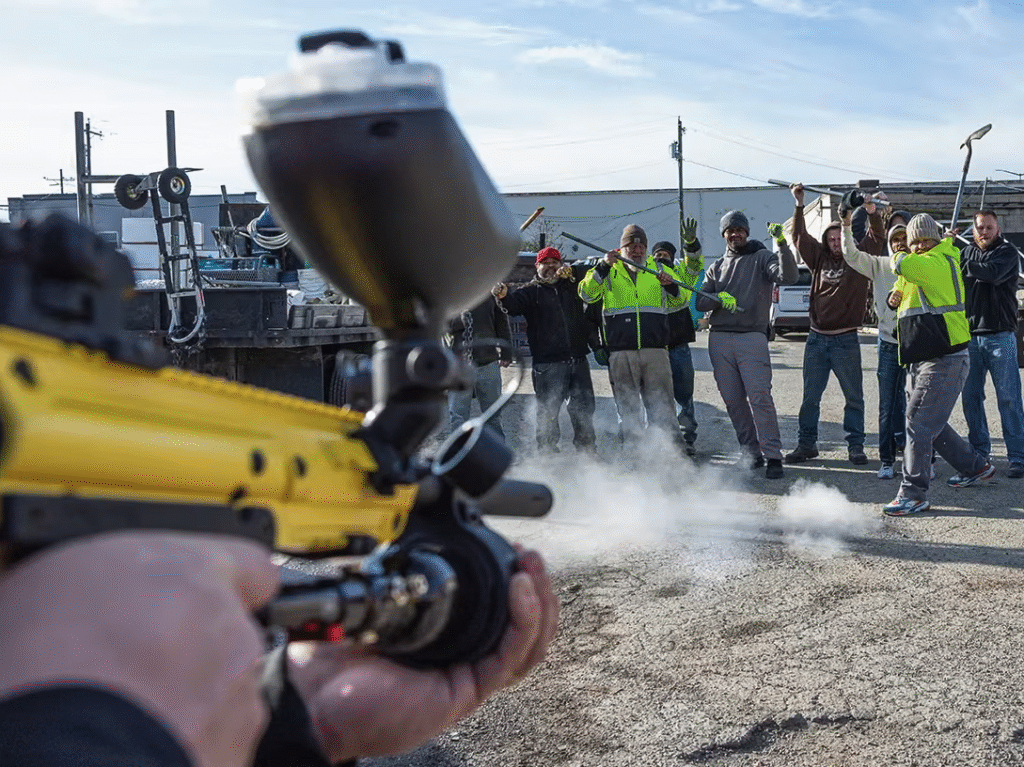
Non-lethal solutions are tactical systems, equipment and techniques designed to help officers gain control of an incident while minimising the risk of causing permanent injury or loss of life.
Their purpose is to:
- Protect officers and members of the public.
- Encourage compliance.
- Create time and distance.
- Support de-escalation.
- Reduce the need to escalate to higher levels of force.
Non-lethal solutions are not intended to replace communication, negotiation or physical restraint. Instead, they provide additional tactical intervention options that allow officers to respond proportionately as situations develop.
Examples include:
- Pepper projectile systems
- OC irritant delivery systems
- Physical barriers and shields
- Restraint devices
- Public order equipment
- Specialist crowd management equipment
Each has its place within a wider operational response.
Understanding the Force Continuum
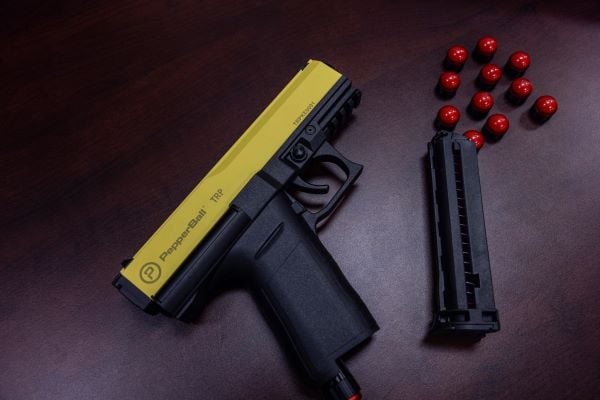
Police officers are trained to apply only the level of force that is necessary, reasonable and proportionate to the threat they face. This graduated approach is often described as the force continuum, allowing officers to increase or reduce tactical responses as situations change.
Typical stages include:
- Officer presence
- Verbal communication
- Physical control and restraint
- Less-lethal options
- Firearms (where authorised and necessary)
Modern non-lethal systems help bridge the gap between close-quarter intervention and higher levels of force, providing officers with additional choices that may help resolve incidents before further escalation becomes necessary.
Read more: Understanding the Police Use of Force Continuum
Why Distance Matters
One of the most overlooked factors in tactical decision-making is distance.
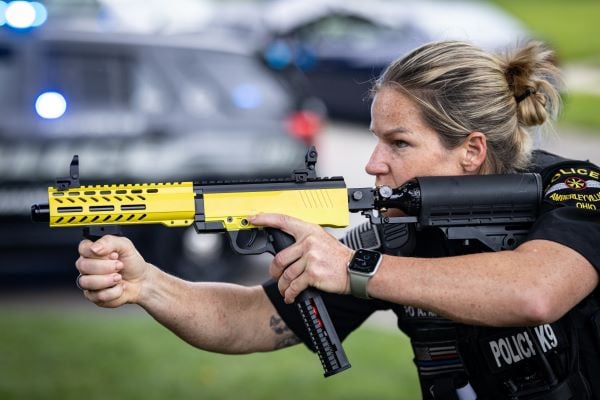
Every tactical option has an effective operating range. Some require officers to be within arm’s reach of a subject, while others are designed for greater stand-off distances.
Maintaining distance can provide significant operational advantages by:
- Reducing the likelihood of physical confrontation.
- Giving officers more time to assess evolving situations.
- Increasing reaction time.
- Protecting officers from edged weapons or improvised weapons.
- Improving containment of violent individuals.
Modern pepper projectile systems provide operational capability from 0 to approximately 50 metres, allowing officers to respond without necessarily closing distance or relying solely on close-contact intervention.
This capability fills an important operational space between traditional close-range options and longer-range tactical responses.
Read more: Why Distance Matters During Tactical Interventions
Non-Lethal and Less-Lethal – Understanding the Difference
The terms non-lethal and less lethal are often used interchangeably, but they describe different categories of capability.
Generally speaking:
Non-Lethal
Designed to achieve compliance while minimising the likelihood of causing permanent injury.
Examples include:
- Pepper projectile systems
- OC delivery systems
- Physical restraint techniques
- Containment tactics
Less-Lethal
Designed to reduce the likelihood of fatal injury compared with conventional firearms but capable of causing serious injury under certain circumstances.
Examples include:
- Conducted energy devices (Tasers)
- Kinetic impact projectiles
- Baton rounds
- Bean bag munitions
Understanding this distinction is important when selecting equipment appropriate to different operational environments.
Read more: Non-Lethal vs Less-Lethal: What’s the Difference?
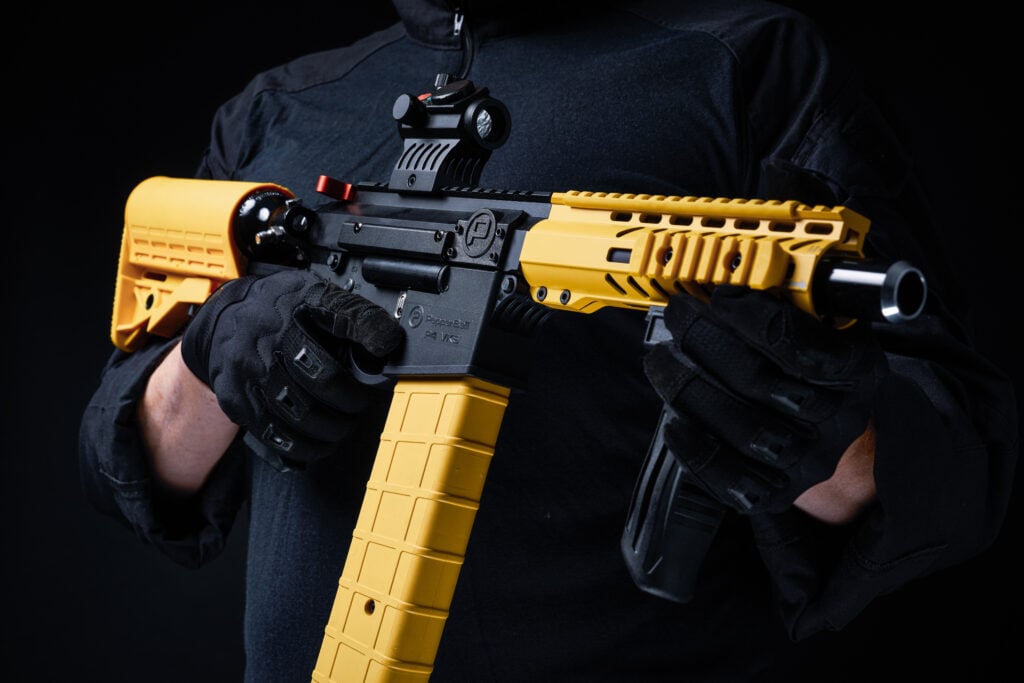
Modern Public Order Equipment
Public order policing continues to evolve.
Police forces require equipment that supports:
- Graduated response.
- Crowd management.
- Area denial.
- Individual subject control.
- Officer protection.
- Public confidence.
As legacy public order systems are reviewed over time, agencies are increasingly assessing equipment that offers improved flexibility, enhanced officer safety and a broader range of tactical options.
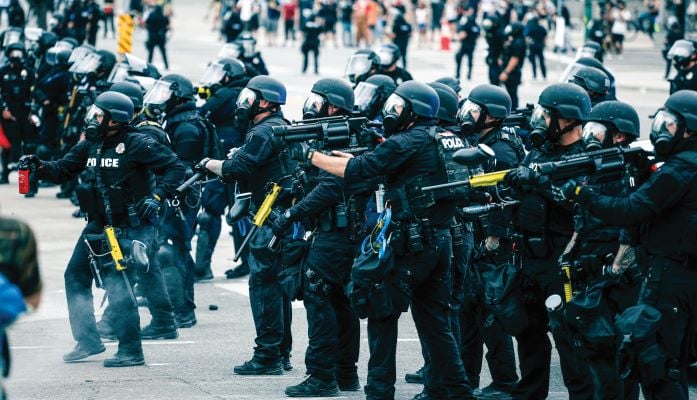
Pepper projectile systems provide officers with the ability to engage individual subjects or influence crowd behaviour while maintaining stand-off distance and reducing the need for physical confrontation.
Read more: Modern Public Order Equipment for UK Police Forces
Non-Lethal Solutions for Different Operational Scenarios
Different incidents require different responses.
Modern non-lethal capabilities can support operations involving:
Violent Individuals
Helping officers maintain distance while seeking compliance.
Read more: Managing Violent Individuals Without Closing Distance
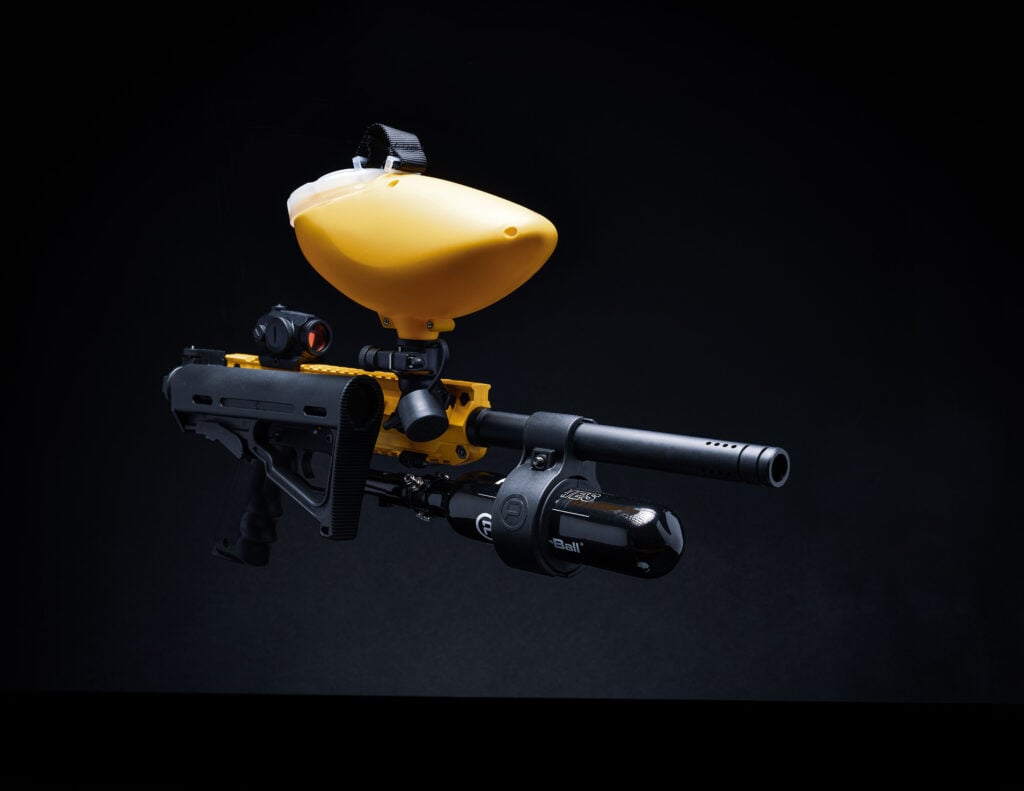
Public Order Incidents
Supporting graduated crowd management and reducing unnecessary escalation.
Read more: Public Order Equipment After Baton Rounds
Custodial Environments
Providing prison officers with additional tactical intervention options for managing violent prisoners while helping reduce risk to staff.
Read more: Non-Lethal Solutions for Prison Officers
Mental Health Incidents
Creating time and distance that may assist communication and de-escalation during incidents involving vulnerable individuals.
Read more: Non-Lethal Options for Mental Health Incidents
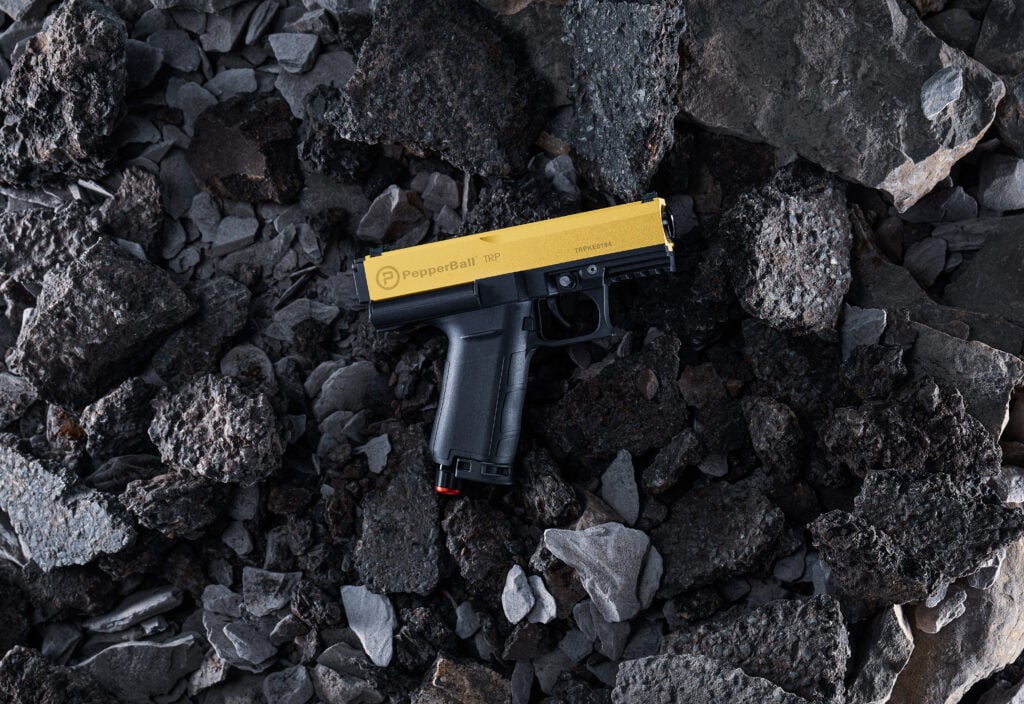
Choosing the Right Tactical Intervention Option
No single capability is suitable for every operational situation.
Factors influencing tactical decision-making include:
- Distance to the subject.
- Behaviour and threat level.
- Number of individuals involved.
- Environmental conditions.
- Presence of members of the public.
- Availability of specialist officers.
- Opportunity for de-escalation.
The most effective policing strategies provide officers with a range of tactical intervention options rather than relying on a single solution.
Read more: Choosing the Right Tactical Response at Every Distance
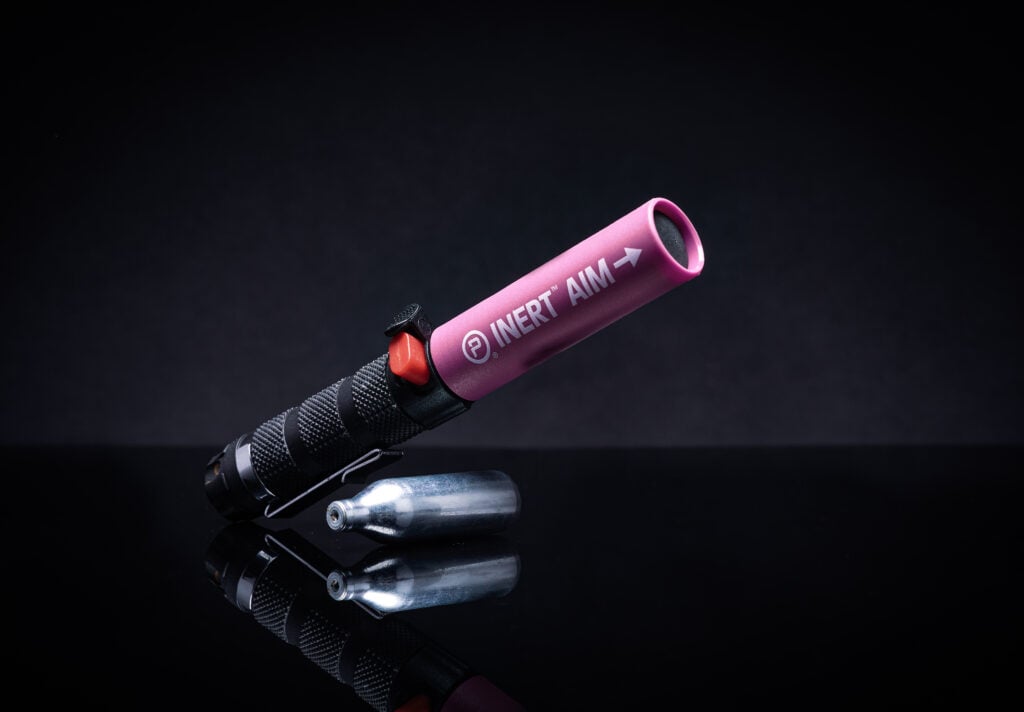
Why Training Matters
Equipment alone does not improve outcomes.
Effective deployment depends upon:
- Appropriate policy.
- Comprehensive training.
- Scenario-based exercises.
- Clear operational procedures.
- Ongoing competency assessment.
Modern non-lethal systems should always be integrated within existing operational doctrine and supported by robust training programmes.
Read more: Introducing New Non-Lethal Capability into Police Training
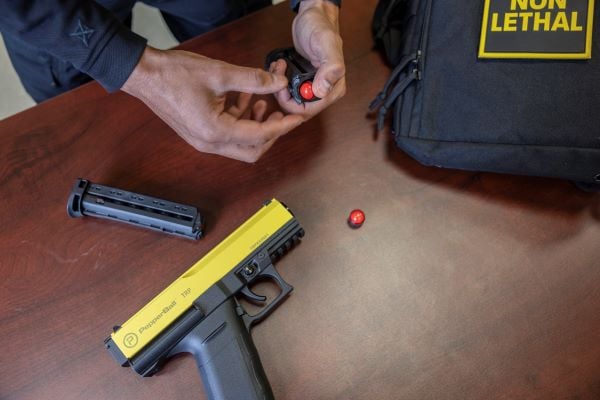
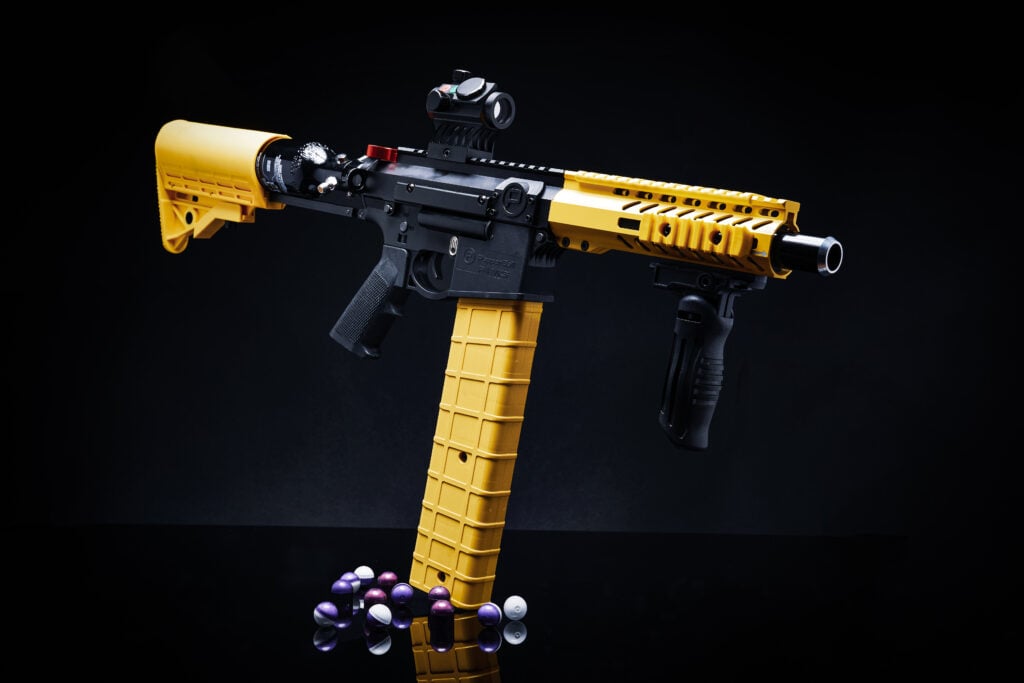
PepperBall Systems from Level Peaks
Level Peaks supplies specialist tactical equipment to UK law enforcement, defence and security organisations.
PepperBall systems provide officers with a versatile non-lethal capability that combines stand-off distance, accuracy and graduated response. Suitable for deployment from 0 to 50 metres, they offer an additional tactical option that can help bridge the gap between close-contact interventions and longer-range public order capabilities.
Supported by product expertise, training and technical guidance, Level Peaks works with organisations seeking practical, operationally effective solutions for today’s policing challenges.
To learn more about PepperBall systems and how they can support your operational requirements, contact the Level Peaks team or explore our range of specialist non-lethal solutions.
Explore Our Knowledge Centre
Continue reading:
- Future Public Order Equipment After Baton Rounds
- Non-Lethal vs Less-Lethal: What’s the Difference?
- Understanding the Police Use of Force Continuum
- Why Distance Matters During Tactical Interventions
- The Missing Gap Between Taser and Baton Rounds
- Modern Public Order Equipment for UK Police Forces
- Managing Violent Individuals Without Closing Distance
- Non-Lethal Solutions for Prison Officers
- Choosing the Right Tactical Response at Every Distance
- Can PepperBall Replace a Taser?