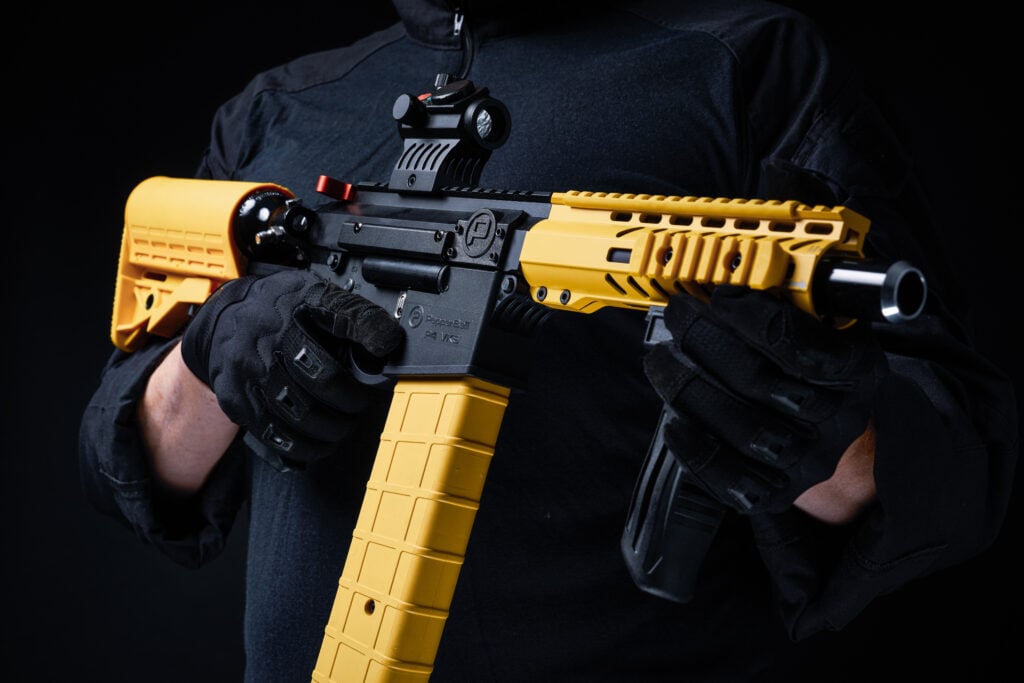
Spend any time around police armouries, public order units or tactical training teams and you’ll hear the terms non-lethal and less-lethal used regularly. Sometimes they’re used interchangeably. Strictly speaking, they shouldn’t be.
The distinction isn’t just about terminology; it influences procurement decisions, operational tactics, officer training and, ultimately, how incidents are resolved on the street.
As policing has evolved, so too has the thinking around force options. The goal today isn’t simply to provide officers with alternatives to firearms. It’s to give them more opportunities to control situations safely, proportionately and with the least amount of harm possible.
That’s where understanding the difference between less-lethal and non-lethal systems becomes important.
It’s Not About Labels – It’s About Outcomes
When officers are faced with a violent individual, an armed suspect or an escalating public order incident, they’re not thinking in marketing terms. They’re thinking about three things:
- How do I protect myself and the public?
- How do I bring this incident under control?
- What’s the safest option available to me right now?
Every tactical option carries some level of risk. The challenge is selecting the one that achieves control while minimising unnecessary harm.
That’s where the distinction begins.
What Is a Less-Lethal System?
A less-lethal system is exactly what the name suggests. It is designed to reduce the likelihood of a fatal outcome compared with the use of conventional firearms, but it still relies on applying a level of force that can cause significant injury.
Examples include:
- Baton rounds
- Kinetic impact projectiles
- Conducted Energy Devices (Tasers)
- Bean bag rounds
- 40 mm impact munitions
These systems have undoubtedly saved lives and remain important tools for many police services around the world.
However, history also shows why the industry moved away from calling them “non-lethal”.
Kinetic impact rounds, for example, have been associated with fatalities and permanent injuries during public order incidents. Likewise, conducted energy devices have been extensively studied because, although generally effective, they are not without medical risk.
That doesn’t make these systems inappropriate. It simply reflects the reality that any tactic relying on blunt-force impact or electrical incapacitation carries the potential for serious injury under certain circumstances.
For that reason, the accepted terminology today is less-lethal.
What Makes Something Non-Lethal?
Non-lethal systems approach the problem differently.
Rather than relying primarily on impact or incapacitation, they aim to influence behaviour while reducing the likelihood of causing serious or permanent injury.
The emphasis shifts from stopping someone through force to gaining control through tactical advantage.
That might involve:
- Maintaining greater stand-off distance.
- Limiting an individual’s ability to continue aggressive behaviour.
- Creating time for communication.
- Encouraging voluntary compliance.
- Giving officers more tactical choices before situations deteriorate.
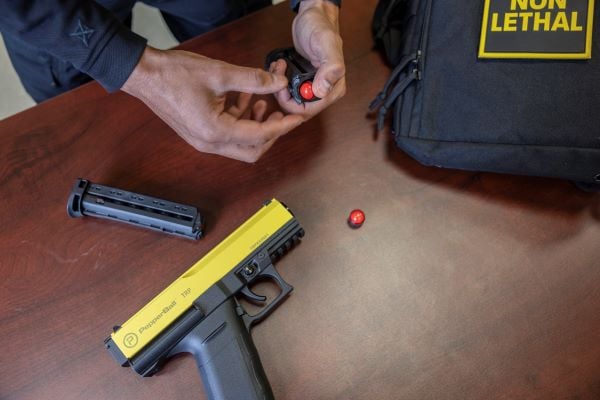
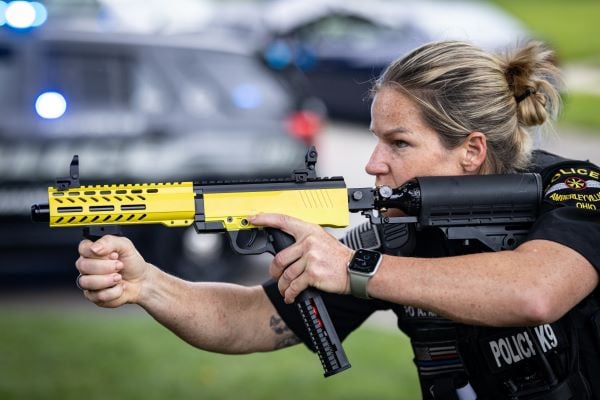
PepperBall systems are a good example of this approach.
Instead of requiring officers to close distance with a violent subject, they allow them to project an OC irritant accurately from close quarters out to approximately 50 metres. In many situations, simply being able to maintain that separation fundamentally changes the dynamics of the encounter.
Distance Is Often the Missing Piece
One of the biggest misconceptions in discussions around use of force is that equipment should be compared purely on what it does.
Experienced officers tend to look first at where it works.
Distance changes everything.
At very close quarters, officers have limited options. Once someone is within arm’s reach, reaction time disappears and physical confrontation becomes far more likely.
Conversely, many traditional force options become less practical as distance increases.
This is where modern non-lethal systems have carved out an important role.
A capability that allows officers to engage effectively from 0 to 50 metres gives commanders and frontline officers considerably more flexibility. They can respond earlier, create space, protect colleagues and members of the public, and potentially prevent situations escalating to the point where more injurious force becomes necessary.
In operational terms, that flexibility is often far more valuable than raw stopping power.
Why Public Order Has Changed
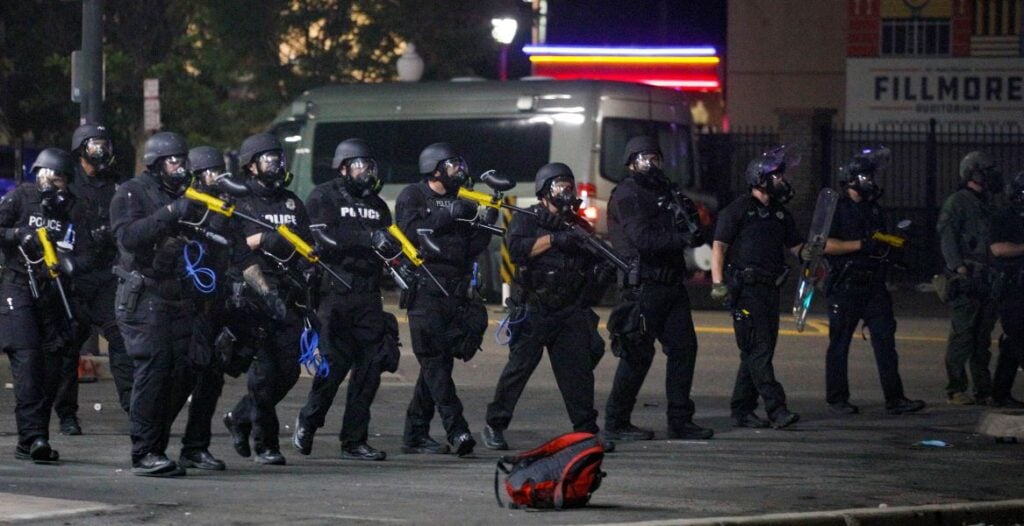
Public order policing illustrates this evolution particularly well.
Historically, police forces needed systems that could reach individuals or crowds at significant distances. Kinetic impact munitions fulfilled that role for many years.
Today, however, expectations have changed.
Police services are expected to demonstrate:
- Proportionality.
- Accountability.
- De-escalation wherever possible.
- Greater protection for officers and the public.
- Reduced risk of serious injury.
That doesn’t mean traditional less-lethal capabilities no longer have a place. It means agencies are increasingly looking for additional options that provide greater flexibility across a wider range of operational scenarios.
Non-lethal systems form part of that broader toolkit.
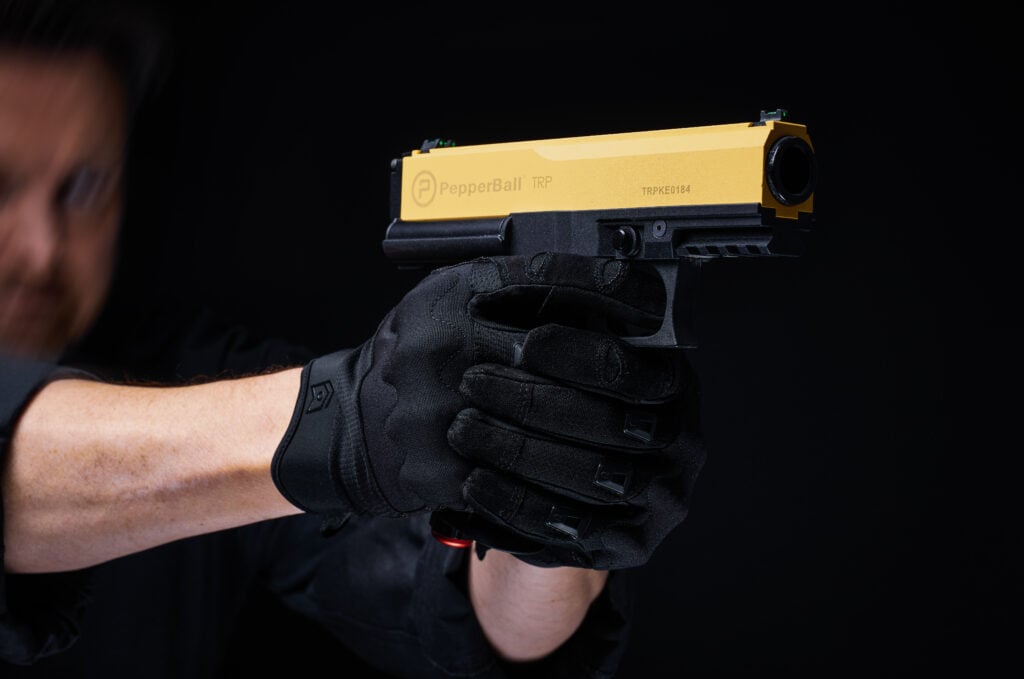
PepperBall’s Place in the Force Continuum
PepperBall isn’t designed to replace every existing capability, and it shouldn’t be viewed that way.
Its value lies in filling an operational gap.
It gives officers another decision point before incidents progress towards higher levels of force.
That capability can be particularly valuable when dealing with:
- Violent or aggressive individuals.
- Public disorder.
- Prison disturbances.
- High-risk arrests.
- Perimeter security.
- Subjects armed with improvised weapons.
The ability to maintain distance while delivering a graduated response often gives officers more time to assess, communicate and adapt their tactics as situations evolve.
Why Procurement Teams Are Looking Beyond Traditional Categories
When organisations evaluate new tactical equipment today, they’re asking different questions than they did twenty years ago.
It’s no longer simply:
“Which system has the greatest range?”
Instead, procurement teams are considering:
- Does it support proportional use of force?
- Can officers deploy it safely across multiple scenarios?
- Does it reduce unnecessary physical confrontation?
- Will it integrate with existing doctrine and training?
- Does it provide operational flexibility rather than a single solution?
The most effective capabilities are rarely those that replace everything else. They’re the ones that give officers more options and more opportunities to resolve incidents safely.
So, Which Is Better?
There isn’t a universal answer.
Less-lethal and non-lethal systems serve different purposes.
Less-lethal options remain appropriate in many operational situations and continue to play an important role within modern policing.
Non-lethal systems provide an additional layer of tactical flexibility, particularly where maintaining distance, creating time and reducing injury are priorities.
The strongest use-of-force model isn’t built around a single piece of equipment. It’s built around giving officers the right option at the right moment, supported by training, judgement and clear operational policy.
As policing continues to evolve, that’s increasingly where non-lethal capabilities are finding their place.
Related Articles
To learn more, explore:
- Non-Lethal Solutions for Modern Law Enforcement
- Why Distance Matters During Tactical Interventions
- Understanding the Police Use of Force Continuum
- The Missing Gap Between Taser and Baton Rounds
- Choosing the Right Tactical Response at Every Distance
Or contact Level Peaks to discuss how PepperBall systems can support safer, more flexible tactical response options for UK law enforcement.