
Modern military operations demand equipment that protects personnel, supports mobility and enables individuals to perform effectively in challenging environments. Yet much of the equipment traditionally issued to military personnel has been developed around male body proportions, creating potential difficulties for female operators.
As armed forces increasingly recognise the importance of accommodating different body types, female-specific military equipment is becoming an important consideration in soldier protection, operational effectiveness and defence procurement.
From body armour and load carriage to tactical clothing and personal protective equipment (PPE), correctly fitted equipment can make a significant difference to comfort, mobility, endurance and safety.
For defence organisations, the objective is not simply to provide smaller equipment. It is to ensure that every operator has access to equipment designed and configured around their physical requirements and operational role.
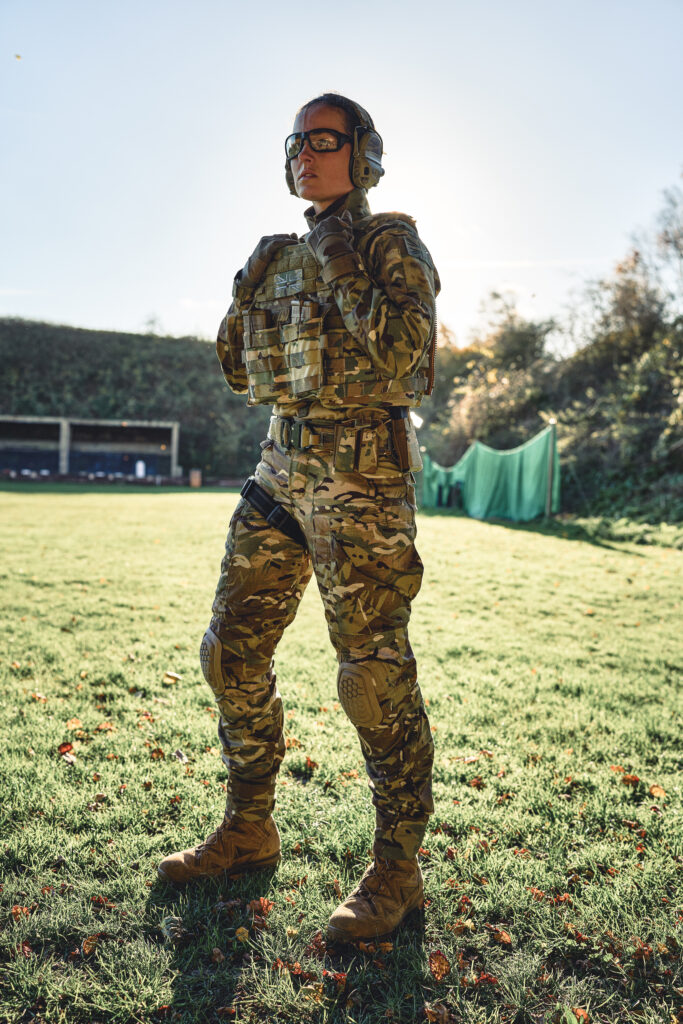
Why Does Female-Specific Military Equipment Matter?
Military personnel are expected to operate in physically demanding environments, often carrying substantial equipment loads for extended periods.
Body armour, communications equipment, ammunition, medical supplies and other mission-essential items must work together without unnecessarily restricting movement or increasing physical strain.
However, equipment designed primarily around male body proportions may not provide an appropriate fit for all female personnel.
Differences in torso length, shoulder dimensions, chest shape, waist-to-hip proportions and other anatomical characteristics can influence how equipment fits and functions.
These differences become particularly important when several items of equipment are worn together.
For example, a body armour system that does not fit correctly may interfere with the positioning of load-bearing equipment. A poorly positioned equipment belt may restrict movement, while an unsuitable protective vest can create pressure points during prolonged use.
The operational consequences can extend beyond discomfort.
Poor equipment fit may contribute to:
- Restricted movement when running, climbing, kneeling or adopting operational positions.
- Uneven distribution of carried equipment weight.
- Pressure points and discomfort during extended operations.
- Reduced compatibility between body armour, clothing and load carriage.
- Difficulties accessing mission-essential equipment.
- Increased physical fatigue and distraction.
Addressing these challenges requires equipment designed around the operator rather than expecting the operator to adapt to unsuitable equipment.
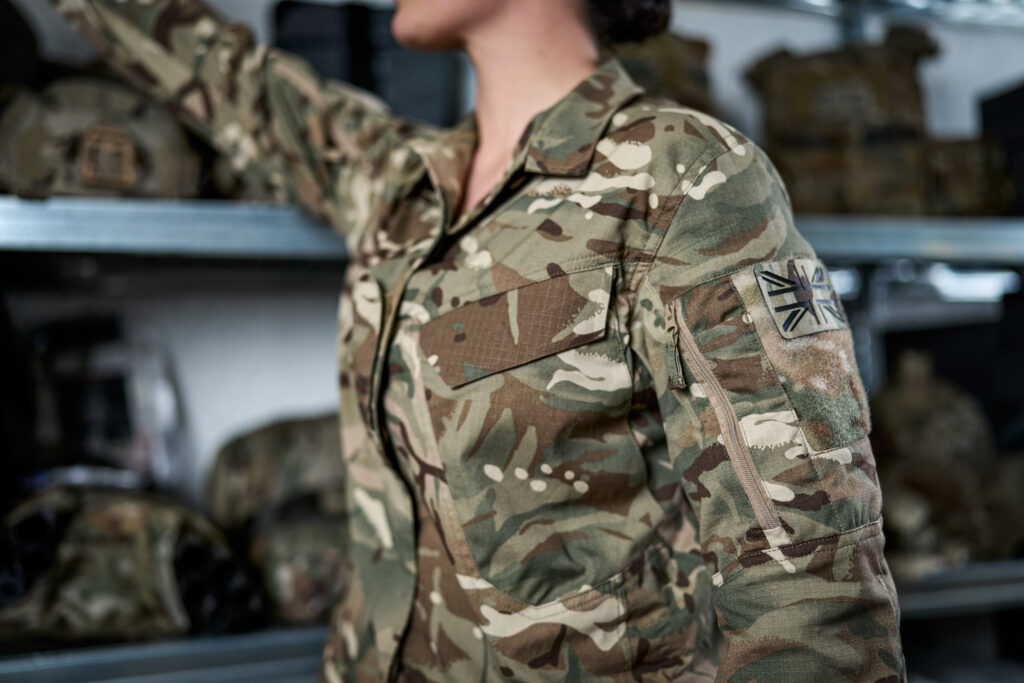
Female Body Armour: Protection Depends on Correct Fit
Body armour is among the most important elements of military personal protective equipment.
Its primary purpose is to provide protection against specified ballistic and fragmentation threats. However, achieving the required level of protection also depends on the armour being correctly fitted, positioned and worn.
Traditional body armour designs may not adequately accommodate the anatomical differences between male and female operators.
For some female personnel, poorly fitted armour can create excessive pressure around the chest, shoulders or waist. It may also affect the positioning of protective components or interfere with natural movement.
Simply issuing a smaller version of an existing armour system does not necessarily resolve these problems.
Female-specific body armour considers factors such as body shape, torso dimensions, adjustment, protective coverage and compatibility with other equipment.
An appropriately configured system should aim to provide:
Effective protective coverage
Ballistic panels and protective plates must be correctly positioned to provide the intended protection without creating unnecessary gaps or compromising the manufacturer’s tested configuration.
Freedom of movement
Operators need sufficient mobility to perform tasks such as climbing, entering vehicles, adopting firing positions and moving through confined spaces.
Comfort during prolonged use
Body armour may be worn continuously for extended periods. Appropriate fit and weight distribution can help reduce unnecessary pressure and discomfort.
Compatibility with other equipment
Armour must work alongside communications systems, load carriage, operational clothing and other mission-essential equipment.
For defence procurement teams, these considerations demonstrate why body armour selection should involve more than choosing a protection rating.
The complete system must be evaluated against the requirements of the individual operator and the intended mission.
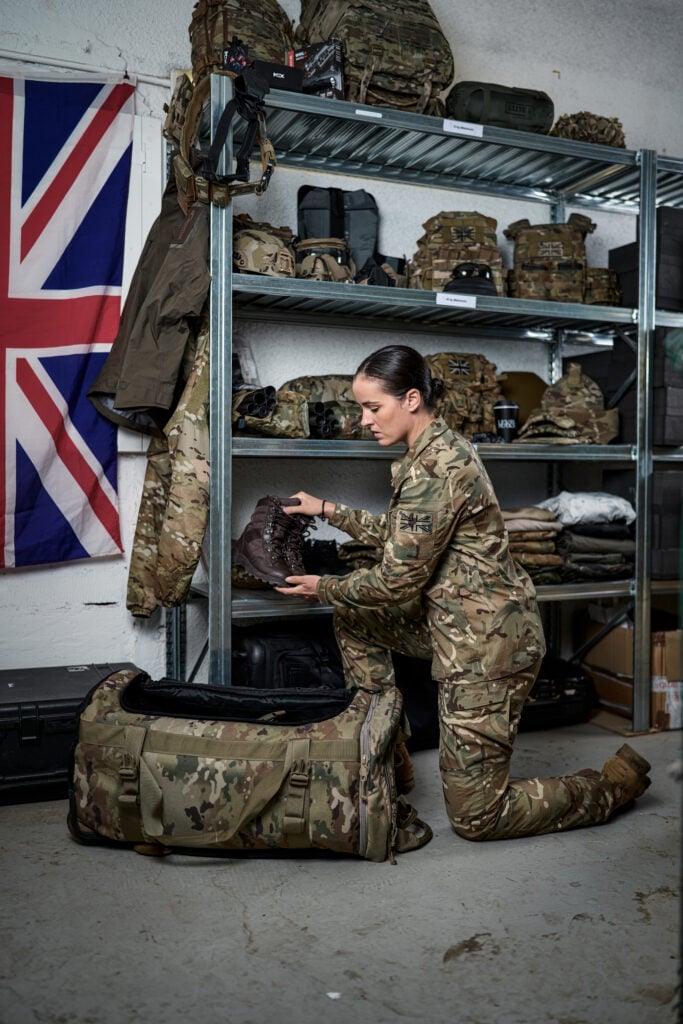
Load Carriage and the Importance of Female Ergonomics
Modern military personnel frequently carry significant operational loads.
Depending on their role, this may include ammunition, water, communications equipment, medical supplies, batteries, protective equipment and other essential items.
How that weight is distributed can influence physical performance, fatigue and mobility.
Load carriage systems designed around male body proportions may not position equipment appropriately for every female operator.
Differences in torso length, shoulder width and waist-to-hip proportions can affect the positioning of shoulder straps, waist belts, tactical vests and equipment pouches.
For example, a load-bearing belt positioned incorrectly may interfere with hip movement or create discomfort when sitting, kneeling or moving over difficult terrain.
Similarly, shoulder straps that do not accommodate the operator’s body shape may create pressure points or affect the stability of carried equipment.
Female-specific load carriage solutions aim to address these issues through appropriate sizing, adjustability and equipment positioning.
Why load distribution matters
The objective of effective load carriage is not simply to accommodate the maximum possible equipment weight.
It is to ensure that essential equipment can be carried securely, accessed efficiently and distributed appropriately across the body.
A well-configured system should consider the relationship between the operator’s body shape, physical capabilities, equipment requirements and operational environment.
This is particularly important during prolonged dismounted operations, where the cumulative effects of equipment weight and poor fit can become increasingly significant.
Importantly, reducing unnecessary weight and improving equipment integration should be considered alongside female-specific design.
Even correctly fitted equipment can impose an excessive physical burden if the overall system is unnecessarily heavy.
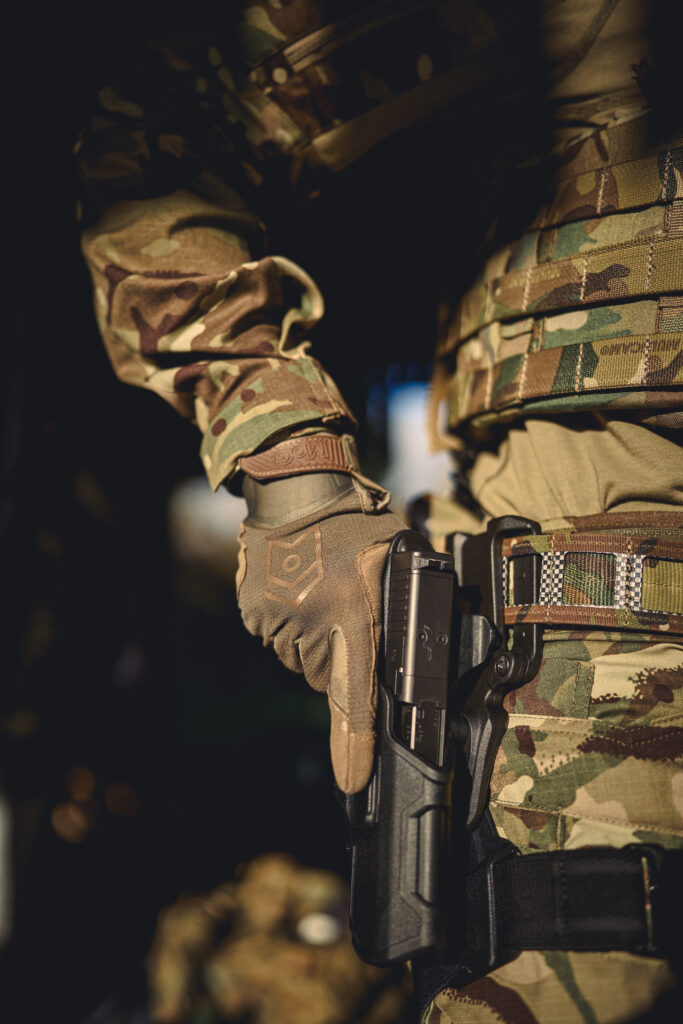
Operational Clothing Designed Around the Female Operator
Operational clothing is another area where appropriate fit can influence military performance.
Combat uniforms must accommodate a wide range of movements while providing durability, environmental protection and compatibility with body armour and other equipment.
Historically, female personnel have sometimes been issued smaller versions of clothing originally patterned around male body shapes.
However, reducing garment dimensions does not necessarily produce an appropriate female fit.
Differences in body proportions can influence sleeve length, shoulder positioning, waist shaping, hip accommodation and the placement of protective components.
Purpose-designed female operational clothing can address these requirements through more appropriate garment construction and sizing.
For example, female-fit combat trousers may incorporate adjustments to waist and hip proportions, rise dimensions and knee protection positioning.
Combat shirts may require different shaping around the chest, shoulders and torso to improve comfort and movement when worn beneath body armour.
These design considerations are particularly relevant when clothing must function as part of an integrated equipment system.
Clothing and equipment must work together
A correctly fitted combat uniform should not be considered in isolation.
It needs to work alongside body armour, tactical belts, load carriage and other protective equipment.
Excess material beneath armour may create discomfort, while poorly positioned pockets or seams can interfere with equipment.
The objective is to ensure that clothing supports the operator’s movement and protection requirements without introducing unnecessary restrictions.
For a more detailed examination of specialist combat clothing, see our article on Crye Precision Combat Clothing: How Operational Clothing Supports the Modern Soldier.
Female-Specific PPE and Soldier Protection
Beyond body armour and clothing, female military personnel require a wide range of personal protective equipment.
This may include helmets, protective eyewear, gloves, footwear and specialist equipment designed for particular operational environments.
Correct sizing and fit are essential considerations across these categories.
Protective equipment that is too large, poorly positioned or insufficiently adjustable may compromise comfort, interfere with other equipment or prevent the item from functioning as intended.
For example, a helmet must fit securely and remain compatible with communications equipment, hearing protection and other head-mounted systems.
Similarly, protective gloves must provide appropriate protection while allowing sufficient dexterity to operate equipment.
The requirement is not necessarily for every item to have a separate female-specific design.
Rather, procurement teams should ensure that the available equipment accommodates the full range of intended users.
This may involve female-specific products, broader sizing options, improved adjustment mechanisms or alternative equipment configurations.
The most appropriate solution depends on the equipment, the operator and the operational requirement.
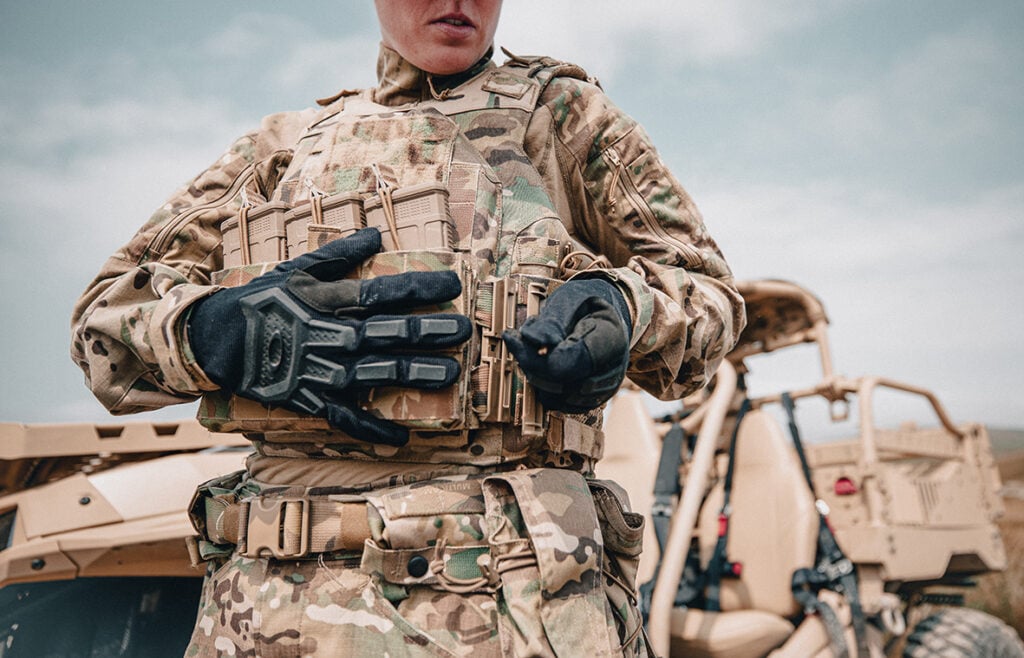
How Equipment Fit Influences Operational Performance
The relationship between equipment fit and operational performance becomes particularly important when personnel are required to operate for extended periods.
Military tasks often involve repeated physical movements, substantial equipment loads and exposure to challenging environmental conditions.
Poorly fitted equipment can introduce additional physical demands that may accumulate throughout an operation.
For example, an operator repeatedly adjusting uncomfortable body armour may experience unnecessary distraction.
A poorly positioned equipment belt may interfere with movement or access to essential items.
An unsuitable load carriage system may contribute to fatigue during prolonged movement.
Individually, these issues may appear relatively minor. Collectively, they can affect the operator’s ability to perform effectively.
Mobility and agility
Appropriate equipment fit supports the freedom of movement required for operational tasks.
Endurance and fatigue
Improved load distribution and reduced pressure points can help minimise avoidable physical strain during extended operations.
Protection and safety
Correctly fitted protective equipment is important in ensuring that the equipment provides its intended level of protection.
Confidence in equipment
Personnel need confidence that their equipment will remain secure, accessible and functional throughout an operation.
These considerations demonstrate why equipment fit should be treated as an operational capability requirement rather than simply a matter of personal comfort.
Why Female-Specific Equipment Requires an Integrated Approach
Providing appropriate equipment for female military personnel involves more than selecting individual products.
The various elements of the soldier system must work together.
A female-specific body armour system, for example, may provide an improved fit when worn independently. However, its effectiveness as part of the complete equipment configuration also depends on compatibility with load carriage, clothing, communications equipment and other protective systems.
Similarly, an appropriately fitted tactical belt must function alongside the operator’s armour and other carried equipment.
This is why an integrated approach to equipment selection is important.
Defence organisations should consider the complete equipment configuration rather than evaluating every component independently.
This involves understanding the intended users, their operational roles, the threats they face and the equipment they need to carry.
It also requires practical evaluation with the personnel who will use the equipment.
The importance of operator feedback
Female operators can provide valuable insight into how equipment performs during training and operational activities.
Their experience can help identify issues that may not be apparent during initial product selection.
Feedback may highlight difficulties with adjustment, equipment positioning, mobility or compatibility between different components.
Incorporating this information into equipment development and procurement can help organisations identify more appropriate solutions.
Ultimately, the objective is to provide an integrated soldier system that supports protection, mobility and operational effectiveness across the full range of personnel.
Female-Specific Equipment and Defence Procurement
For defence organisations, the growing recognition of female-specific equipment requirements has implications for procurement and capability development.
Traditional procurement processes may focus heavily on technical specifications, protection ratings, durability and cost.
Although these remain essential considerations, they should be accompanied by an assessment of equipment fit and suitability across the intended user population.
This means understanding the physical characteristics and operational requirements of the personnel who will receive the equipment.
It also means recognising that a single equipment configuration may not be appropriate for every operator.
An effective procurement approach should consider the availability of suitable sizes and configurations, opportunities for user trials, compatibility with existing equipment and the support required for fitting and adjustment.
Where necessary, manufacturers and capability partners may need to adapt existing products or develop alternative solutions.
The objective is not to create unnecessary complexity within the equipment supply chain.
It is to ensure that procurement decisions deliver equipment capable of meeting the operational requirements of the people who will use it.
How Level Peaks Supports Female Military Operators
Level Peaks recognises that effective operational equipment must be designed and selected around the individual operator as well as the mission.
Through its dedicated Female Solutions capability, Level Peaks works with military, police and emergency services organisations to identify and deliver equipment suited to female personnel.
This includes female-fit operational clothing, body armour, personal protective equipment and load carriage systems.
The company’s approach begins with understanding the requirements of the end user.
By working directly with female operators and collaborating with specialist manufacturers, Level Peaks helps identify equipment solutions that address practical challenges involving fit, protection, mobility and comfort.
This may involve selecting existing female-specific products, adapting equipment configurations or supporting the development of more appropriate solutions.
Importantly, Level Peaks considers these requirements within the wider operational equipment system.
The objective is not simply to supply individual items of equipment, but to help organisations deliver integrated solutions that support operational effectiveness.
Level Peaks also provides fitting advice, training and ongoing support to help customers maximise the effectiveness of their equipment.
Discover more about Level Peaks Female Solutions and the company’s approach to equipment designed around female operators.
Supporting the Future of Military Capability
The development of female-specific military equipment reflects a broader change in how defence organisations approach soldier capability.
Modern equipment must meet demanding protection and performance requirements while accommodating the physical characteristics of the people expected to use it.
For female military personnel, access to appropriately designed and fitted equipment is an important part of achieving this objective.
Body armour, load carriage, operational clothing and PPE must all contribute to a coherent equipment system that supports the operator.
This requires collaboration between defence organisations, manufacturers, equipment specialists and end users.
As military equipment continues to evolve, consideration of female-specific requirements should become an integral part of equipment development and procurement rather than an additional consideration.
The principle is straightforward: effective military equipment must fit the operator, support the mission and perform when it matters most.
For Level Peaks, this forms part of a wider commitment to delivering operational capability through specialist equipment, integration and an understanding of the people who depend on it.
Frequently Asked Questions
What is female-specific military equipment?
Female-specific military equipment is clothing, protective equipment and operational gear designed or configured to accommodate the anatomical characteristics and requirements of female personnel. It can include body armour, tactical clothing, load carriage systems and PPE.
Why do female soldiers need specifically designed equipment?
Equipment traditionally developed around male body proportions may not fit all female personnel appropriately. Female-specific designs and configurations can help improve comfort, mobility, protective equipment positioning and compatibility with other operational equipment.
Is female body armour different from male body armour?
Female-specific body armour may incorporate different shaping, sizing and adjustment features to accommodate female body proportions. The objective is to provide appropriate protective coverage while supporting mobility and compatibility with other equipment. Any armour system must meet the relevant protection requirements for its intended use.
How does load carriage affect female military personnel?
Load carriage systems distribute the weight of operational equipment across the body. Differences in torso length, shoulder dimensions and waist-to-hip proportions can influence how these systems fit. Appropriate configuration can help improve equipment stability, accessibility and comfort.
Does female-specific military equipment improve operational performance?
Appropriately fitted equipment can support operational performance by reducing unnecessary movement restrictions, discomfort and equipment interference. Its effectiveness depends on the equipment design, the individual operator and the operational requirements.
What should defence organisations consider when procuring female military equipment?
Procurement teams should consider protection requirements, sizing, adjustability, equipment compatibility, user feedback and the operational tasks personnel need to perform. Practical evaluation with female operators can help identify suitable equipment configurations.
How does Level Peaks support female-specific military equipment requirements?
Level Peaks works with defence, policing and emergency services organisations to identify and deliver female-specific operational equipment. Its Female Solutions capability includes clothing, body armour, PPE and load carriage, supported by user engagement, manufacturer collaboration, fitting advice and equipment integration.