
Protection and Fit Together
Female body armour needs to meet the specified protective requirement while fitting the wearer correctly. The carrier, protective components and adjustment system should be evaluated as an approved combination.
Assessment should follow the manufacturer’s fitting instructions and the organisation’s requirements. Particular attention should be given to whether the armour remains correctly positioned, whether adjustment is secure and whether the wearer can complete representative tasks.
Useful questions include:
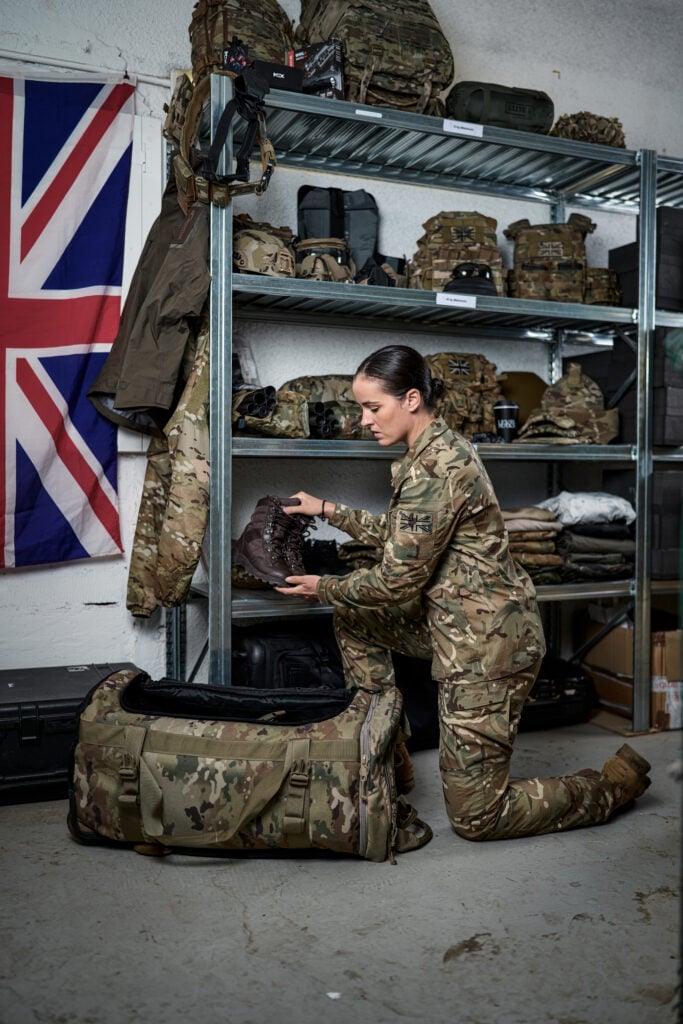
- Is the required coverage maintained during movement?
- Does the armour interfere with sitting, bending or reaching?
- Are there pressure points or areas where the carrier moves excessively?
- Does it work with the issued belt, rucksack and clothing?
- Can the wearer use communications equipment and other essential items?
Comfort feedback should inform selection alongside protective performance and correct fit. Changes to protective components or their configuration should follow the manufacturer’s guidance.
Body armour also belongs within a wider equipment assessment. Our guide to modern soldier systems and integrated soldier capability explains why protection, communications, power and load carriage need to be considered together.
Women’s Load Carriage: Assess the Complete Configuration
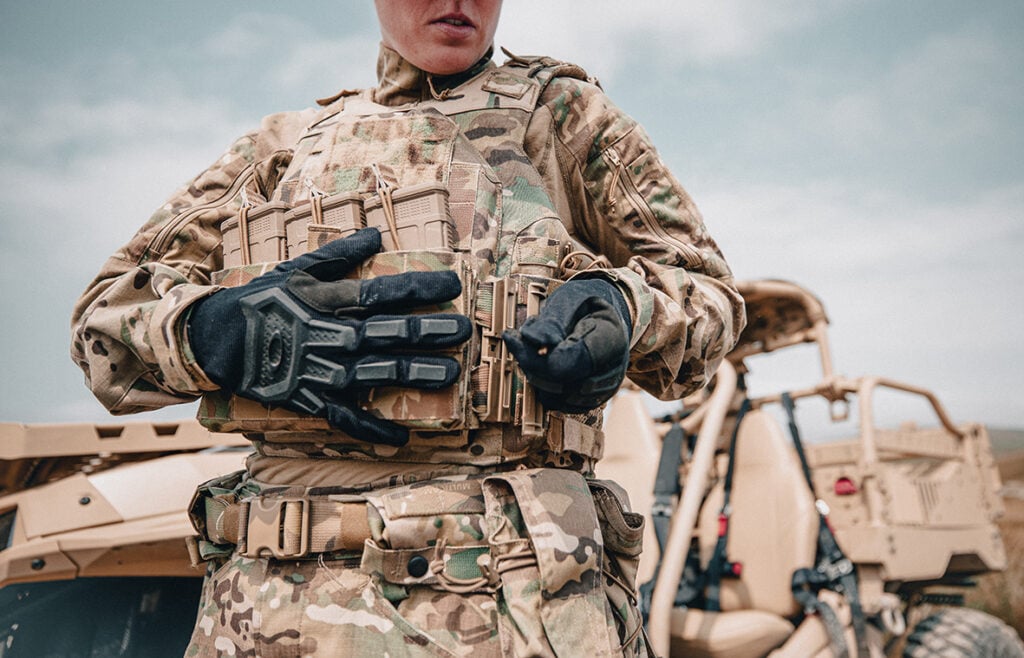
Women’s load carriage should be evaluated with a representative load and the equipment it will accompany.
An unloaded belt or rucksack provides limited insight into how a system will perform during use. Adding pouches, water, communications equipment and other issued items can change its balance, stability and accessibility.
Assessment should cover torso length, shoulder strap positioning, belt fit and the relationship between the load carriage system and body armour. Adjustment should accommodate the wearer without leaving components at the limits of their usable range.
Trials should establish whether:
- Straps and belts remain secure without repeated adjustment.
- Pouches can be reached while wearing gloves and armour.
- The system allows the wearer to sit and move through confined spaces.
- Rucksack straps interfere with armour, cables or other worn equipment.
- The layout remains usable throughout a representative working period.
Load optimisation also starts with reviewing what must be carried. Our article on reducing carried load weight without compromising operational capability explores this wider equipment burden.
Female Operational Clothing and PPE
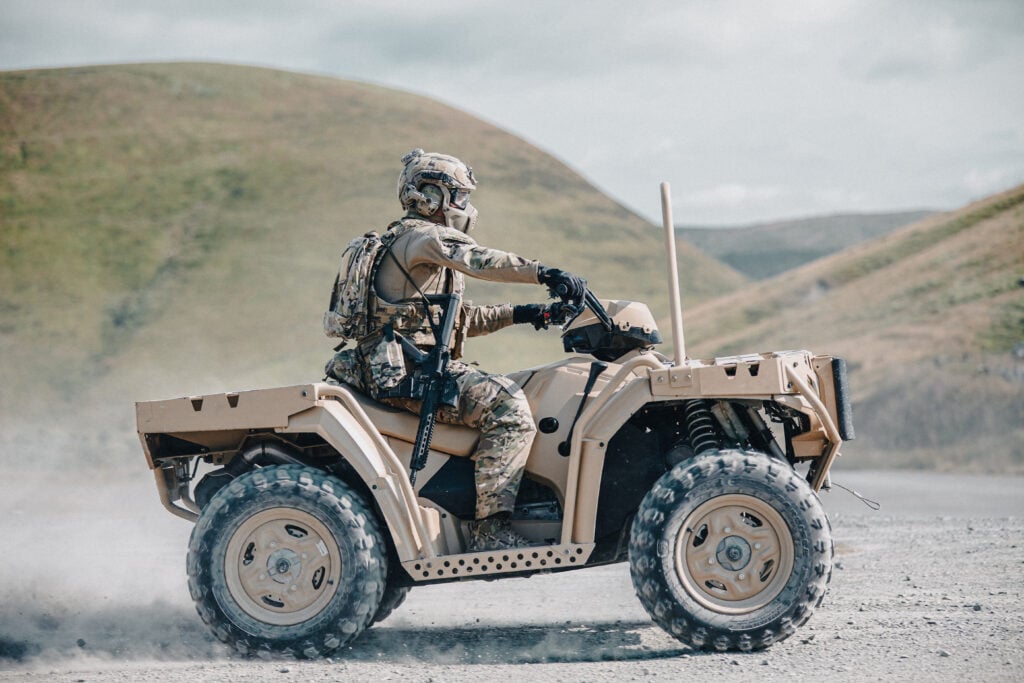
Female operational clothing needs to provide suitable fit across the movements and conditions associated with the role.
Trials should include the intended layering system. A uniform that fits well on its own may behave differently beneath armour or when worn with cold-weather clothing.
Assess sleeve and trouser length, reach, freedom of movement, pocket access and the position of seams and closures beneath worn equipment. Environmental and protective requirements should remain part of the specification throughout selection.
Female PPE requires the same attention to individual fit and compatibility. Helmets, eyewear, hearing protection and gloves should be assessed together where they will be used together.
For example, helmet adjustment should be checked with the intended headset and eyewear. Gloves should allow the wearer to operate the controls and fastenings required for their duties.
These interfaces are explored further in our article on why equipment integration matters for defence organisations.
What Should Procurement Teams Include in User Trials?
User trials should involve personnel who reflect the intended user population, including a meaningful range of body dimensions, roles and experience.
A structured trial makes feedback easier to compare. It should include:
- A clear requirement. Define the tasks, environment, protection and compatibility needs before comparing products.
- Supported fitting. Give participants appropriate fitting instructions and record the sizes and settings used.
- Complete equipment configurations. Trial clothing, armour, PPE and load carriage together.
- Representative activity. Include movement, seated work, equipment access and other relevant duties.
- Recorded observations. Capture movement restrictions, equipment displacement, access problems and adjustment needs.
- Follow-up assessment. Revisit issues after fitting changes and over a suitable trial period.
Feedback should distinguish between an incorrect size, an adjustment problem and a limitation in the product’s design. Each calls for a different response.
Procurement should also account for replacement availability, fitting support, maintenance and future changes to issued equipment.
Supporting Female Personnel Through Better Equipment Selection
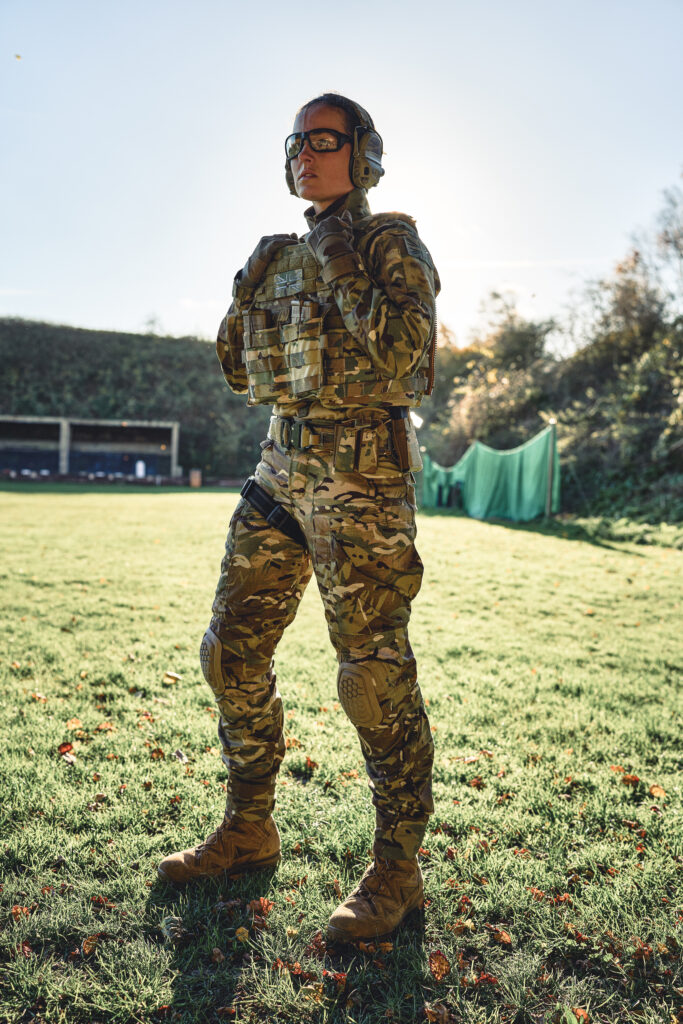
Effective female tactical equipment selection connects individual fit with the organisation’s operational requirements.
At Level Peaks, our Female Solutions capability brings together female-fit clothing, body armour, PPE and load carriage, informed by engagement with users and manufacturers.
For organisations reviewing equipment for female personnel, the starting point is understanding where current provision falls short. That may involve limited sizing, poor compatibility, difficult adjustment or gaps identified during user trials.
Speak to Level Peaks about your female tactical equipment requirements and the clothing, protection and load carriage needs of your personnel.